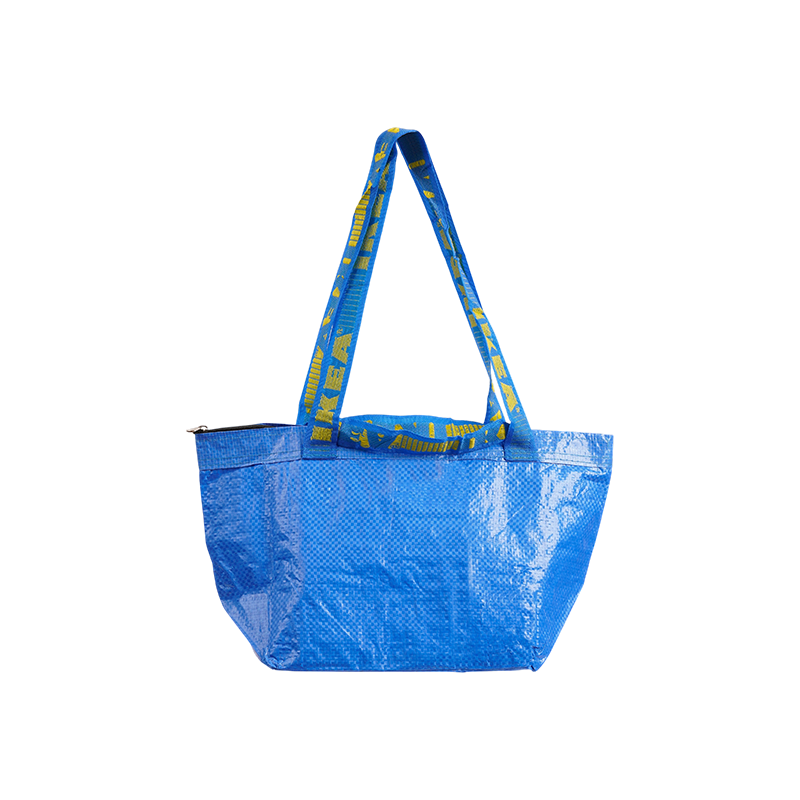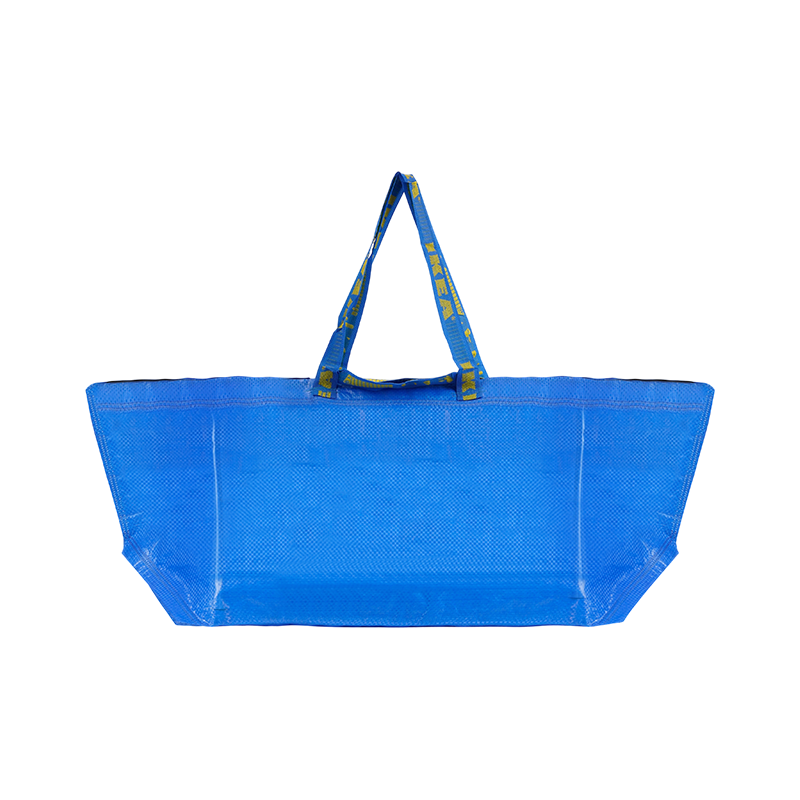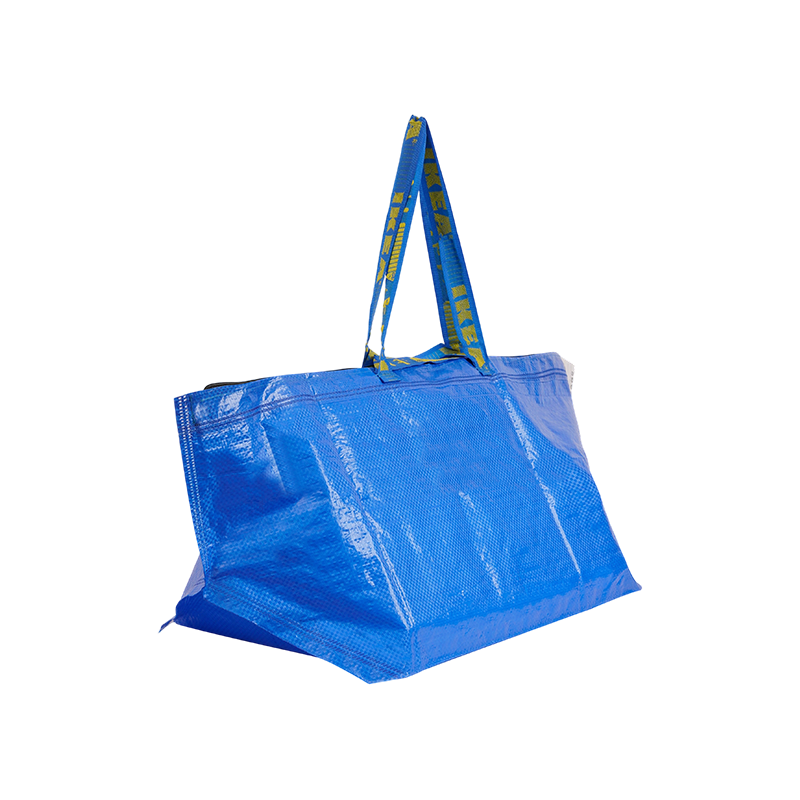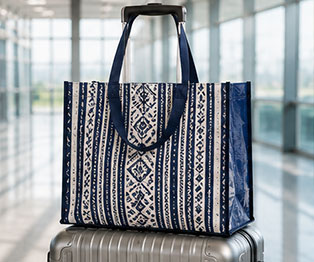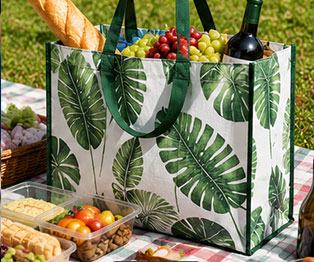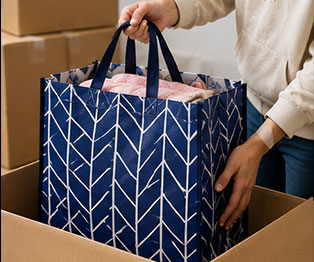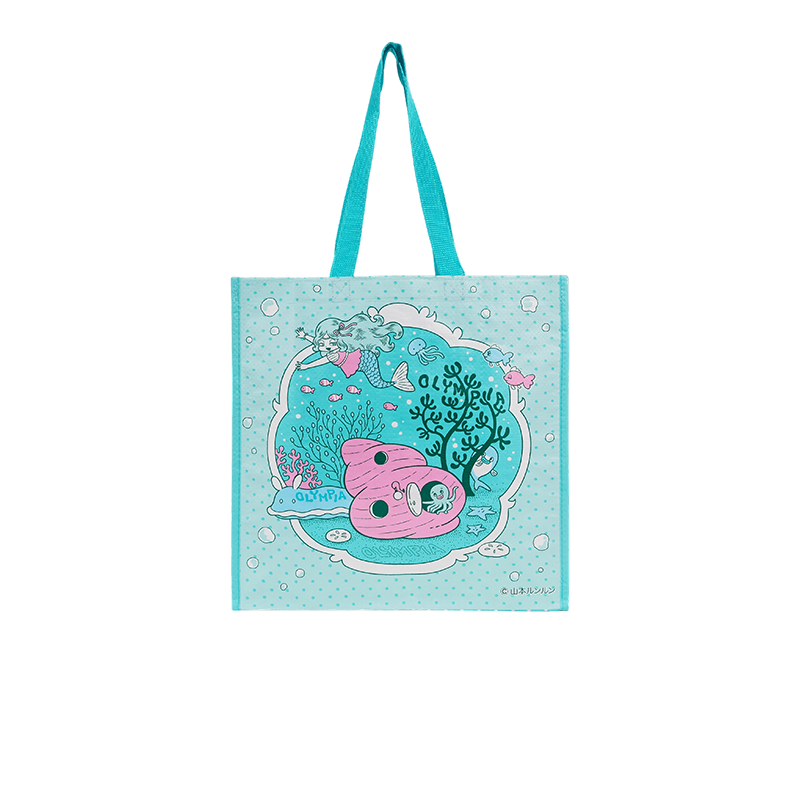
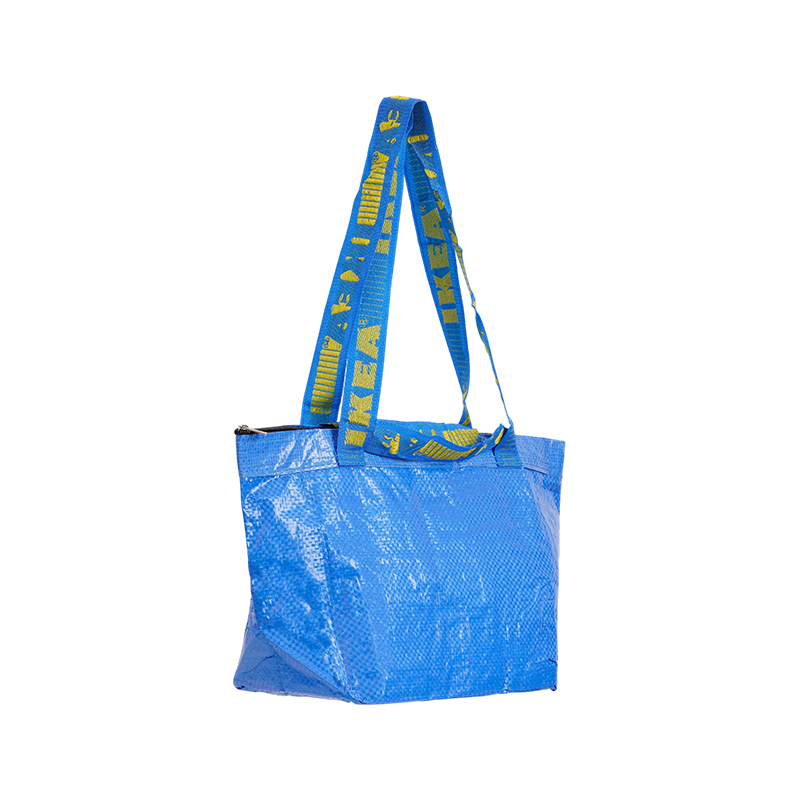
This blue RPP boat-shaped shopping bag is designed with environmental friendliness, lightweight design, and high practicality at its core. Made from recyclable RPP (recycled polypropylene) material, it is tough, wear-resistant, heavy-duty, and resistant to deformation. The material itself has good waterproof properties, keeping your belongings dry and clean during everyday shopping, outdoor activities, or in damp weather.
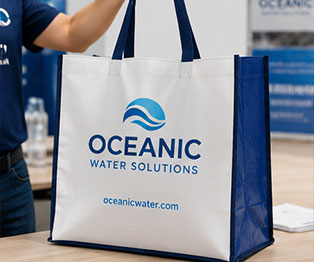
The unique boat-shaped structure allows for greater capacity and stability. The wide opening makes it easy to hold boxed, bottled, and miscellaneous items, making it ideal for shopping malls, supermarkets, department stores, and daily commutes. The clean and stylish blue exterior showcases a refreshing and modern design style, and can be paired with printed slogans, brand logos, or promotional graphics, making it an ideal medium for promotional activities.
The bag is reusable and far more durable than disposable shopping bags, effectively reducing plastic waste and aligning with environmental trends and sustainable consumption concepts. Whether used as a retail gift, a shopping bag, or a promotional gift bag, it combines functionality and image display, making it a multi-purpose shopping bag that combines environmental value with fashionable aesthetics.
Description
Application
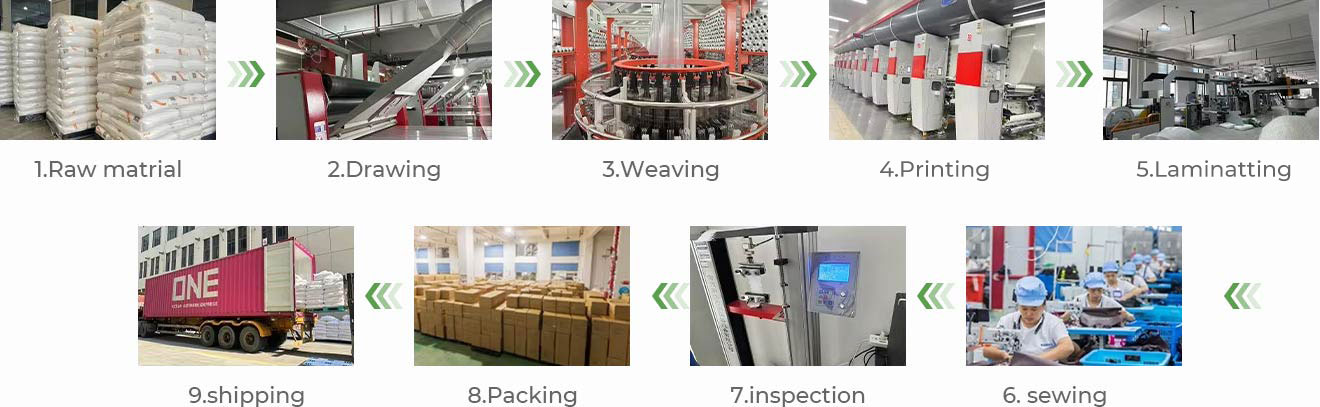
Production Process
Packaging Process
FAQ
Contact Us
Description
|
Product Type |
Woven Shopping Bag |
|
Features |
Waterproof |
|
Material |
100% Polypropylene |
|
Length |
27 cm |
|
Width |
27 cm |
|
Height |
18.5 cm |
|
Closure method |
zipper |
|
Cleaning |
Simply rinse and dry |
|
Use |
Grocery, laundry, and shopping bag |
|
Style |
IKEA-style |
|
MOQ |
1000pcs |
Application
PRODUCTION PROCESS
Packaging process
FAQ
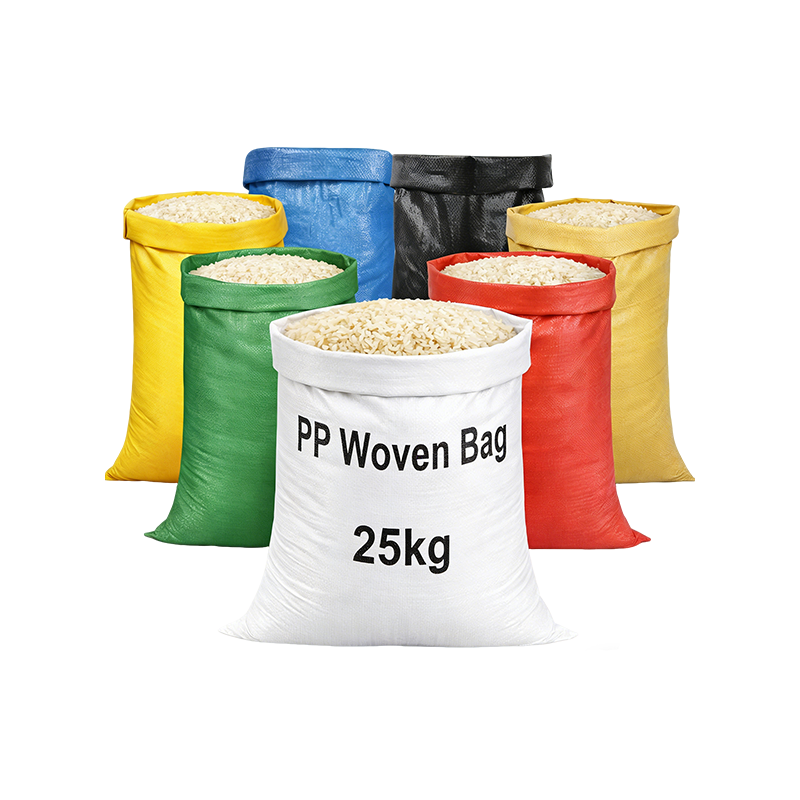
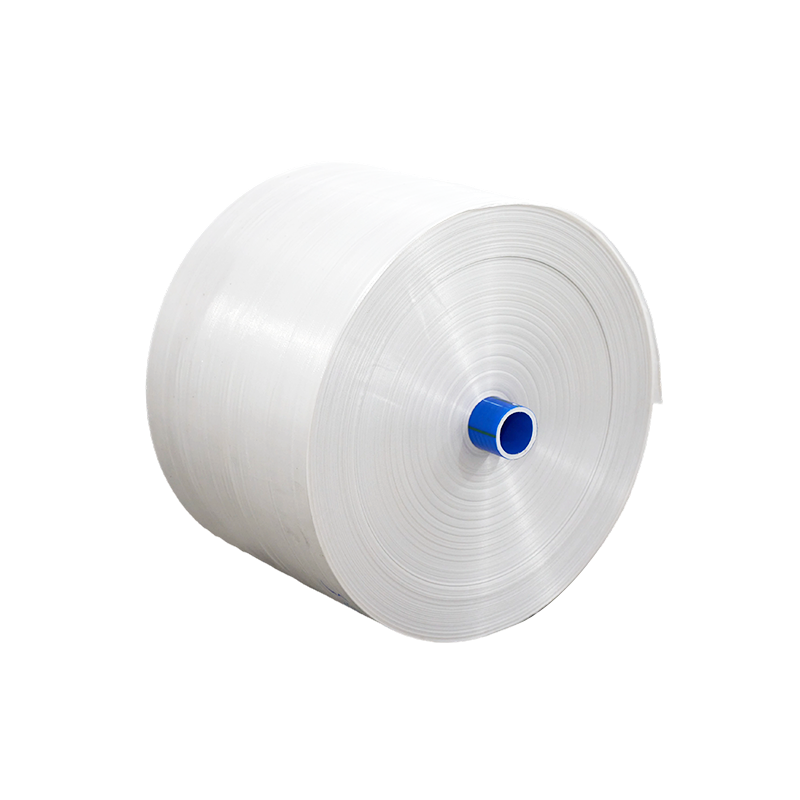
PP woven fabric is a high-strength fabric made from polypropylene (PP), a durable thermoplastic polymer. It is widely used in various industries, including packaging, agriculture, and construction, due to its moisture resistance, recyclability, and robust physical properties.
PP woven bags are highly durable, tear-resistant, and moisture-proof. They are perfect for heavy-duty use in industries such as agriculture, construction, and packaging. These bags are also eco-friendly as they can be recycled and reused multiple times.
Our PP woven fabric and PP woven bags are manufactured in Wenzhou, Zhejiang, China. With 34 years of experience in the industry, we ensure high-quality production with advanced machinery and a skilled workforce.
Yes, we offer customization for PP woven fabric in various colors, thicknesses, sizes, and coatings. Whether you need bags, rolls, or other forms of fabric, we can tailor the product to meet your exact specifications.
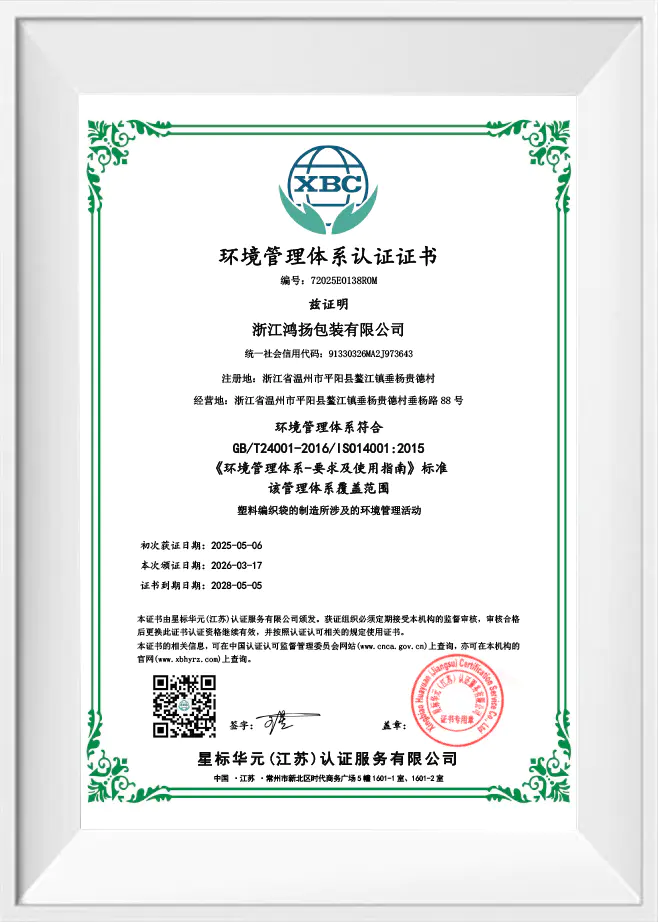
Yes, our PP woven bags are eco-friendly, as they are made from polypropylene, which is fully recyclable. Additionally, we offer options for biodegradable coatings to make them more environmentally sustainable.
Our PP woven fabric and bags are used in a wide range of industries, including:
Agriculture (grain, feed, fertilizer)
Construction (sand, cement, building materials)
Retail (shopping bags, promotional bags)
Industrial packaging (food, chemicals)
Food packaging
Our PP woven bags are designed for high durability. They are resistant to tearing, UV light, and moisture, ensuring long-lasting use even under challenging conditions. They are ideal for heavy-duty applications, ensuring secure and reliable packaging.
Yes, we specialize in large-scale orders of PP woven fabric and PP woven bags. With 34 years of experience, we can meet high-volume demands while maintaining consistent quality and efficient delivery.
Yes, we provide samples of our PP woven fabric and PP woven bags for customers to assess quality before placing an order. Contact us to request samples that match your needs.
Production lead times vary depending on the size and complexity of the order. Generally, it takes 7-14 business days for standard orders. For customized or bulk orders, the lead time may be longer.
To place an order, simply reach out to us via our contact form or email with your requirements. Our team will provide you with a quote, and we’ll work with you to finalize details such as quantity, customization, and delivery.
Yes, we offer global shipping for PP woven bags and PP woven fabric. Our experienced logistics team ensures timely and safe delivery to international destinations.
We accept various payment methods, including bank transfer, PayPal, and other secure payment systems. We offer flexible terms for large or customized orders, which can be discussed with our sales team.
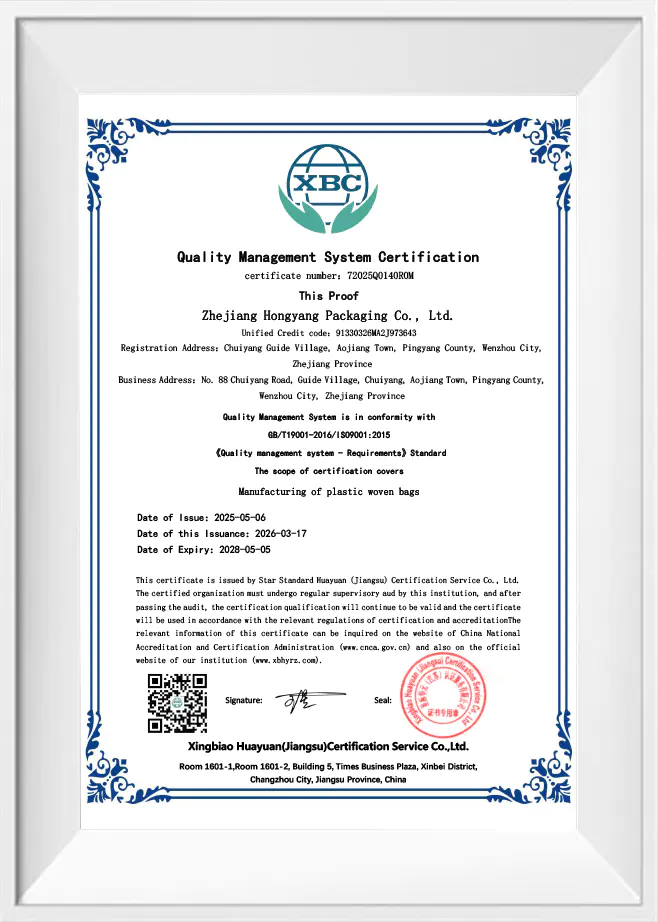
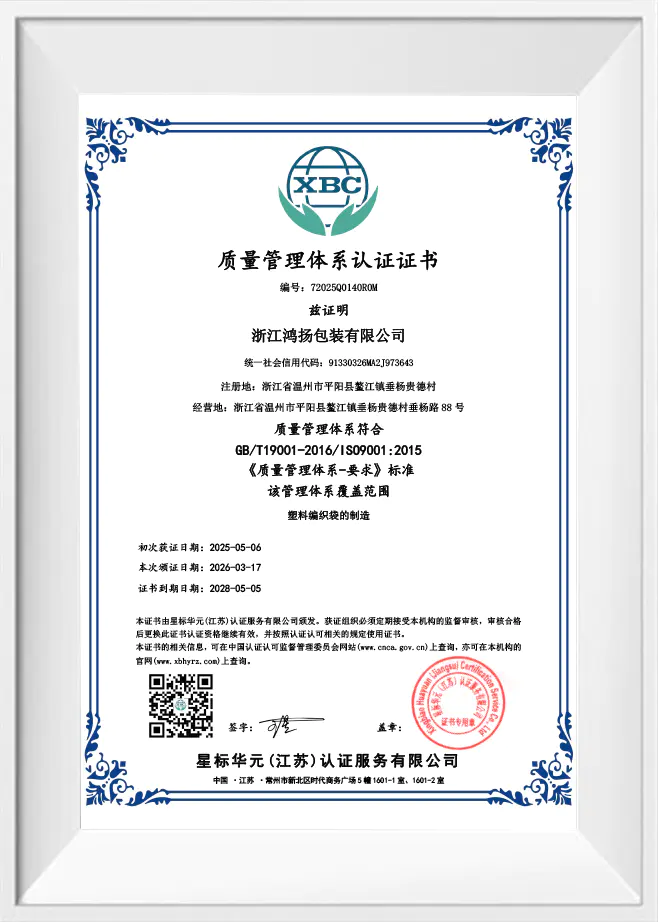
With 34 years of industry experience, we are a trusted and reliable manufacturer of PP woven fabric and PP woven bags. Our long-standing expertise ensures high-quality products, competitive pricing, and excellent customer service. We work closely with equipment manufacturers to optimize fabric structure, ensuring that your automation systems run smoothly and efficiently.
Contact Us
Demand for PP laminated kraft paper bags has quietly moved from a niche industrial product into one of the packaging industry's most talked-about categories. Walk through any major trade show in 2025 ...
View MoreOn the 58th World Earth Day, Zhejiang Hongyang Packaging Co., Ltd. officially released its "2025 Corporate Social Responsibility Report." The report elaborates on the company's practices and commitmen...
View MoreZhejiang Hongyang Packaging Co., Ltd. today proudly announced the official completion and operational launch of the Phase II expansion project at its second production base in Zhejiang Province. The p...
View MoreAs regions like the European Union enforce increasingly stringent environmental traceability requirements, global demand for recycled material packaging continues to rise. In response to this trend, Z...
View MoreWenzhou, Zhejiang – The woven bag manufacturing industry is witnessing a significant moment of intelligent upgrading. Zhejiang Hongyang Packaging Co., Ltd. today officially announced the full deployme...
View MoreReusable retail packaging has changed a lot in the past decade, but one format has stayed consistently present in supermarkets, grocery chains, and promotional retail systems. It is not usually seen as a "high-tech" product, but it plays a practical role in everyday packaging circulation.
Instead of focusing on technical complexity, this type of bag is mainly defined by how it performs in real use-carrying weight, being reused, and staying cost-efficient for large-scale distribution.
At the material level, a Woven Shopping Bag is built from polypropylene fibers that are woven into a fabric sheet. This weaving process creates a stable grid structure that gives the material its basic strength and flexibility.
In production, the fabric is not used directly. It goes through cutting, stitching, and assembly to form a usable retail bag. Handles are attached, edges are reinforced, and in many cases printing is added depending on the customer' s requirement.
What looks like a simple retail item is actually the result of several processing steps that determine how durable and reusable it will be in practice.
In real manufacturing, you will usually see different levels of products such as supermarket-grade lightweight versions, reinforced grocery styles, and promotional retail designs.
The reason it spread in retail is actually pretty practical. Most of the time, retailers just need something that doesn' t break easily and still keeps cost under control when ordered in large quantities.
Once production becomes stable, this kind of packaging is easy to scale, so supermarkets and chain stores tend to stick with it.
From the customer side, it doesn' t feel complicated. You just use it like a normal bag, but it lasts longer than disposable ones, so people naturally reuse it a few times.
For retailers, there' s also a simple benefit-logos printed on the bag don' t stay in the store. They move around in daily life, which gives the brand more exposure without extra effort.
In supermarkets, the focus is usually very direct: can it hold weight and survive repeated use. Most customers don' t care much about appearance in that setting.
Grocery shops often go for lighter versions. It' s still strong enough for food and daily items, but they try to keep the cost down because the usage is more frequent and high-volume.
In branded retail stores, things shift a bit. The look of the bag starts to matter more-printing quality, color, even how clean the surface feels in hand.
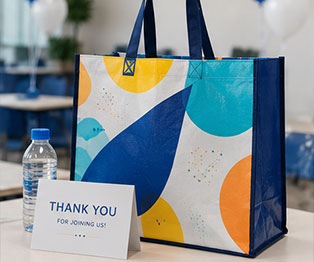
Promotional events and trade fairs use it in a slightly different way. Bags are handed out in bulk, and many of them end up being reused later in everyday situations, which keeps the brand visible longer than the event itself.
In some places, it even stops being "retail packaging" and just becomes a normal household carry bag people keep around.
When people actually buy this type of product, they don' t start with material descriptions. They usually begin with very practical questions like how much weight it needs to carry, how often it will be reused, and how tight the budget is.
That' s also why search terms like "custom reusable grocery bag supplier" or "heavy duty retail shopping bag with logo" show up so often. They' re not generic keywords-they come from very specific use cases.
In most real projects, the choice isn' t about finding the "best" option. It' s more about finding something that performs reasonably well in all key areas-strength, cost, and daily usability.
Compared with disposable plastic bags, woven versions are clearly more durable and suitable for repeated use. Plastic still dominates in extremely low-cost disposable markets, but it does not offer long lifecycle performance.
Compared with non-woven alternatives, woven materials generally handle heavier loads better and maintain structure under repeated use.
Paper-based bags are often preferred in premium or eco-positioned retail environments, but they are more sensitive to moisture and less suitable for long-term reuse.
Compared with cotton or canvas options, woven polypropylene is more cost-efficient and easier to produce in large volumes, even though natural fabrics may feel more premium.
This positioning explains why this category sits in the middle range of retail packaging solutions.
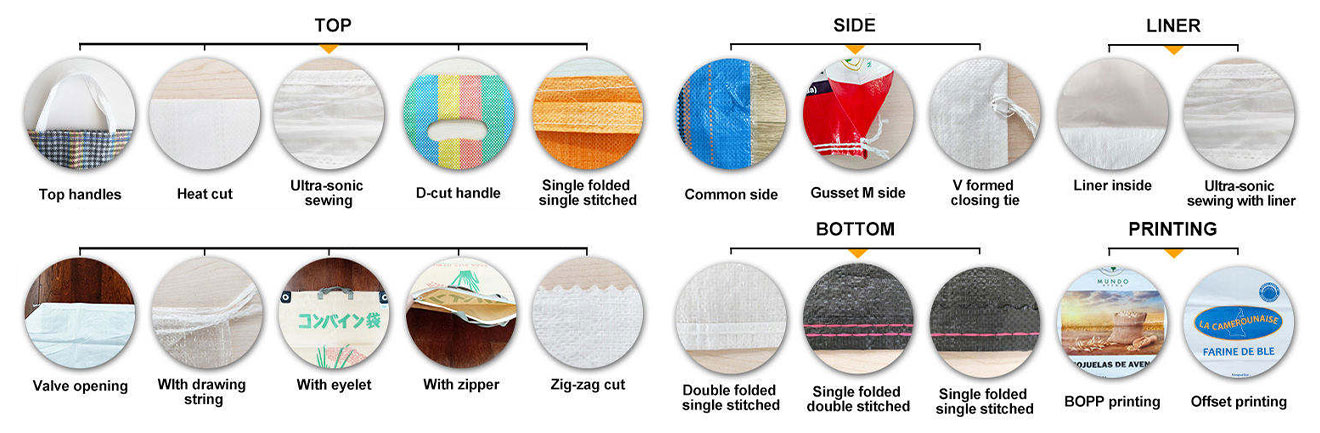
There is no single standardized version in production. Specifications are adjusted based on customer requirements.
Some buyers prioritize strength, which leads to thicker fabric and reinforced stitching. Others focus on branding, which requires better printing quality or laminated finishes.
Handle structure also varies depending on application needs, with some designs optimized for cost efficiency and others for higher durability.
These variations are not random-they reflect different retail and distribution environments.
Despite its advantages, this packaging format has limitations.
One is surface finish. Compared to paper or textile-based alternatives, the appearance is more industrial and may not suit high-end retail positioning.
Another limitation is environmental perception. Although reusable, it is still based on synthetic material, which may not align with certain sustainability expectations.
It is also not designed for ultra-low-cost disposable use, where simpler packaging options are still more common.
However, in most retail environments where reuse and durability are required, these limitations are generally acceptable trade-offs.
The evolution of this product category is gradual rather than disruptive.
Printing quality is improving as brands demand more consistent visual presentation across packaging systems.
Material usage is being optimized, with lighter fabric structures introduced to reduce cost and resource consumption while maintaining usability.
There is also increasing attention to more environmentally aligned solutions, especially in markets where reusable packaging is influenced by regulation or branding strategy.
At the same time, application scope is expanding beyond supermarkets into e-commerce, subscription delivery, and promotional logistics.
In today' s packaging landscape, this type of reusable bag is not positioned as a premium innovation or a disposable low-cost item. Its role is mainly functional.
A Woven Shopping Bag exists because it solves a simple requirement: providing a reusable, cost-efficient, and structurally stable packaging option for large-scale retail distribution.
In real usage, that balance between durability and cost efficiency is often more important than any single technical advantage, which is why it continues to be widely used across global retail systems.