

 Guidé Village, Chuiyang, Aojiang Town, Pingyang County, Wenzhou City, Zhejiang Province, China

 English
 Español
 عربى
عربى 中文简体
中文简体
Why Buy Customized PP Woven Fabric by the Roll
Date:Sep 18, 2026
Walk into a bag conversion plant and you won't find pallets of finished packaging sitting around waiting for a buyer. What you'll find instead are rolls of woven fabric stacked near the printing line, waiting to become whatever the next order calls for. That single detail says a lot about how packaging production actually works behind the scenes.
For many manufacturers, a finished bag is really the last step in a longer chain, not the starting point. The process begins with a roll of woven fabric that moves through printing, cutting, sewing, and lamination before it takes on any particular shape or purpose.
This approach hands businesses real control over how their packaging comes together. Rather than ordering ready-made bags locked into one fixed format, a manufacturer can buy Customized PP Woven Fabric by the roll and shape the material around its own production needs from there.
The difference might sound minor on paper, but it changes how a packaging operation gets organized on the floor. A single roll can flow into printing, cutting, sewing, or lamination without forcing the buyer to overhaul their entire production model just to accommodate one supplier's fixed offering.
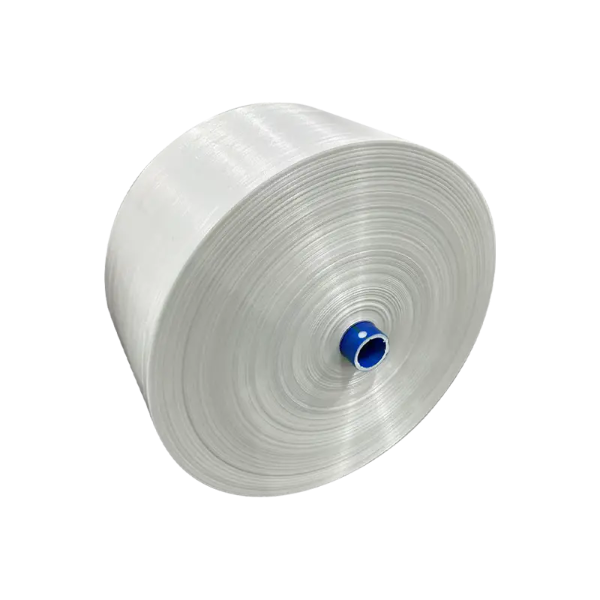
This is exactly why Woven Fabric Roll products have become such a central part of the supply chain for businesses working in bag manufacturing and packaging conversion. The material itself isn't the finished product; it's a starting point that gets adapted step by step along the way.
Why Are Businesses Buying PP Woven Fabric by the Roll?
A finished woven bag arrives already shaped around one particular application. Its size, construction, printing layout, and closure method have all been decided long before it ever reaches the buyer's warehouse.
A roll of fabric offers a genuinely different starting point altogether. The buyer receives raw material that can be processed however their own production actually requires, which matters a great deal for manufacturers producing several bag types or switching designs frequently between customers.
The fabric slots directly into an existing workflow instead of forcing the business to buy a separate finished bag for every single application that comes through the door. For a company already involved in bag conversion, that distinction carries real weight on the production floor.
The typical process tends to follow a fairly consistent sequence:
| Production stage | What happens |
|---|---|
| Fabric supply | Fabric arrives in roll form from the supplier |
| Material processing | The material enters the buyer's own processing line |
| Printing or treatment | Printing or surface treatment happens when the project calls for it |
| Cutting | The fabric gets cut into the sections the design requires |
| Bag conversion | The pieces are converted into actual bags |
| Finishing | Closures, handles, or other features get added according to the finished product design |
This whole model gives the manufacturer far more involvement in shaping the final packaging than a finished-bag purchase ever would. It also explains why buyers often search specifically for a PP Woven Roll Manufacturer rather than settling for a supplier who only sells finished PP woven bags.
The purchasing decision, in the end, connects directly to how the business actually manufactures its own products.
How Does Customized Fabric Give Manufacturers More Flexibility?
Not every packaging project runs down the same production route. A company producing agricultural bags faces different demands than one making retail shopping bags, and an industrial packaging producer often needs a fabric format that looks nothing like what a consumer-facing business requires.
Buying customized fabric lets these differences get worked out before production even starts. Customization can touch the fabric's appearance, its intended use, how well it processes on existing equipment, or any other requirement the buyer defines up front.
The whole point is making the material fit the production process, rather than forcing an already-running production line to bend awkwardly around an unsuitable material. This becomes especially useful when a manufacturer serves several customers at once with very different needs.
One customer might need a simple printed package with minimal fuss. Another might require a laminated outer surface for a more premium look, while a third project calls for a particular bag shape or an unusual finishing method entirely.
When the fabric arrives in roll form, the downstream manufacturer gets to work with that material according to each project's specific needs, rather than forcing every order through one rigid format. This is exactly what turns custom PP woven fabric into something bigger than a simple material purchase.
It becomes a genuine part of production planning rather than a line item ordered separately from everything else. The buyer gets to walk through the intended application directly with the supplier before the order even goes into production.
That conversation typically covers how the fabric will be handled on the buyer's line, what kind of processing comes next, and roughly what the finished package should look like once everything's done. Getting that clarity early tends to cut down on the kind of unnecessary adjustments that otherwise crop up later in the production run.
How Does Roll Procurement Fit Into Bag Manufacturing?
The relationship between a fabric supplier and a bag manufacturer can stay fairly direct and uncomplicated. A PP Woven Bag Roll Manufacturer supplies material in a form that slots straight into the buyer's own production system, and the buyer takes on responsibility for everything that happens downstream from there.
This setup makes a lot of sense for businesses that already have equipment and trained workers dedicated to bag production. Instead of receiving finished bags they can't modify, they receive raw material that flows through their own workflow exactly the way they need it to.
A manufacturer, for instance, might purchase woven fabric and then decide on the spot how much of it goes toward one bag design versus another. That same production floor can juggle multiple packaging projects at once without leaning entirely on a supplier to hand over every finished format ready-made.
This structure also makes design changes considerably easier to manage day to day. Say a packaging company lands a new order calling for a different printed layout or an unusual bag style than what they normally run.
If that company already handles its own downstream production, it can make those adjustments right inside its existing workflow without waiting on an outside supplier to retool anything. The roll essentially works as a bridge connecting raw material supply to the finished packaging sitting on a customer's shelf.
This is a big reason Woven Roll purchasing appeals so strongly to manufacturers who want to hold onto more control over their own bag production. That said, this approach clearly doesn't suit every business out there.
A company with no bag-making operation of its own will likely find finished bags far more convenient to work with. Roll procurement fits best with businesses that already run their own converting equipment or partner closely with a downstream production team that does.
What Production Benefits Can Come From Using Customized Fabric Rolls?
The real value of roll purchasing becomes a lot clearer once you actually stand on the production floor and watch it happen. Finished bags arrive ready to use immediately, while fabric rolls arrive as raw material still waiting for direction.
That gap gives the manufacturer genuine room to decide exactly how the material gets processed from that point forward. A packaging producer can build its whole workflow around its own equipment and whatever its customers actually need, deciding when to print, when to cut, and how the fabric moves through every remaining stage.
This flexibility helps businesses juggle several different packaging projects inside the same production environment without constant reshuffling. There's a planning advantage buried in here too, one that's easy to overlook until you've lived without it.
When a manufacturer has a clear read on its own production schedule, it can line up material purchasing directly with the work already planned for that week or month. Rather than treating every finished bag as its own isolated purchase, the company manages woven fabric as one connected piece of a much larger manufacturing process.
This approach tends to make more sense for businesses producing packaging on a continuous basis rather than in occasional short runs. The fabric roll becomes an input that gets stored, processed, and converted whenever the schedule actually calls for it.
The real benefit still depends heavily on the buyer's own production model. A company with established downstream operations stands to gain a lot more from this arrangement than a business that only occasionally needs a small batch of ready-made bags.
Why Does Specification Flexibility Matter in Roll Purchasing?
Packaging materials rarely serve just one single purpose across a manufacturer's whole product line. A business might produce bags for several different products, customers, or distribution channels, and each of those applications tends to carry its own particular requirements.
This is exactly where customized fabric earns its keep. Instead of settling on one fixed fabric spec for every project regardless of fit, a buyer can sit down with a PP Fabric Manufacturer and talk through what each specific project actually needs.
The supplier can then produce material built around that intended application rather than something generic pulled off a standard catalog. That conversation usually touches on appearance, printing requirements, processing compatibility, and how well the material fits the buyer's existing workflow already in place.
The real benefit here isn't just having more options to choose from on a spec sheet. It's about steering clear of unnecessary compromises that quietly hurt quality or slow down production later.
A fabric built for one kind of downstream processing may simply not suit a different one at all. Material meant for a printed retail package often carries very different requirements than fabric destined for a plain industrial bag with no printing involved.
Customization gives the buyer and supplier room to sort out these differences before production ever starts, rather than discovering a mismatch halfway through a run. This kind of flexibility also supports businesses that regularly roll out new packaging designs for changing customer needs.
Instead of redesigning the entire purchasing process from scratch for every new project, the manufacturer can keep working inside a familiar roll-based supply model while adjusting the material specifications to fit each new application. For companies running several bag formats side by side, this flexibility becomes just another normal part of everyday production planning rather than a special exception.
How Can Roll Purchasing Support Bulk Packaging Orders?
Large packaging orders demand more than just enough finished bags sitting in a warehouse waiting to ship. They also demand a steady, reliable flow of material moving through the production process without unexpected gaps.
For manufacturers converting woven fabric into finished bags themselves, buying by the roll makes it considerably easier to connect material supply with internal production planning. The business can plan its fabric purchasing around expected orders and then process that material steadily as production actually moves forward.
This proves especially useful when several customer orders happen to share similar material requirements. Rather than managing every finished bag as its own separate procurement item, the manufacturer can organize fabric purchasing around its broader, ongoing production needs instead.
Bulk purchasing also tends to simplify communication with suppliers once the buyer has an ongoing packaging program running. The supplier understands from the start that the material is headed for further processing rather than direct sale.
The buyer, in turn, can share information about the intended application and expected production requirements well before the fabric even gets prepared. For this reason, the relationship with a PP Woven Roll Manufacturer often grows into a longer-term production arrangement rather than staying a single, isolated purchase.
That said, bulk purchasing still needs to stay tethered to realistic production needs on the ground. Buying more material doesn't automatically create an advantage if the fabric doesn't actually match the buyer's processing equipment, or if it just sits unused in storage for months at a time.
Good procurement, at its core, comes down to matching supply honestly with actual production capacity and real demand.
What Should Buyers Ask a PP Woven Fabric Manufacturer?
The quality of communication before an order goes through tends to have a direct, measurable effect on how the finished packaging turns out. A buyer does well to explain clearly what the fabric will actually be used for and what happens to it once it arrives.
A few practical questions can help give that conversation a clear structure from the beginning:
| Question | Why it matters |
|---|---|
| What type of bag will the fabric ultimately become? | Defines the intended end use and downstream construction |
| Will the material get printed before or after it's cut? | Helps establish the appropriate production sequence |
| Does the production process require any lamination step? | Clarifies whether the fabric needs to support additional surface treatment |
| What kind of finishing follows after cutting and sewing? | Shows what additional processing the material must accommodate |
| Will the fabric run through the buyer's own existing equipment? | Helps the supplier consider compatibility with the production workflow |
| Does the packaging need a particular visual appearance or brand look? | Provides context for printing and appearance requirements |
| Will the material serve one single product, or several different applications? | Helps determine whether one fabric format or multiple specifications are needed |
| Is this purchase meant for one production run, or an ongoing packaging program? | Provides context for longer-term material planning |
These questions give the supplier real, useful context rather than a vague material request. A PP Woven Roll Manufacturer can understand the actual application far more clearly when the buyer walks through the complete production process, instead of just naming a type of fabric off a list.
The same logic applies just as directly when working with a PP Woven Bag Roll Manufacturer. That supplier is handing over material that will become part of an entirely different manufacturing process somewhere down the line.
The more clearly that downstream process gets explained upfront, the easier it becomes for both sides to settle on a fabric arrangement that actually works. For buyers sourcing from a PP Fabric Manufacturer, it also helps to discuss how the material will be stored and physically moved before processing even begins.
Roll-based materials need to fit naturally into the buyer's existing handling and production system, not create new bottlenecks nobody anticipated.
When Does a Woven Fabric Roll Make More Sense Than Finished Bags?
The answer here really comes down to who controls the packaging process from start to finish. A manufacturer already handling cutting, printing, sewing, or other bag-making steps in-house tends to prefer fabric rolls, since that material integrates directly into a workflow they already run.
A company that doesn't manufacture bags at all usually prefers finished packaging instead, since it sidesteps the need to manage all those extra production stages entirely. The distinction can be laid out fairly simply once you look at it this way.
| Purchasing format | Better-suited production model |
|---|---|
| Woven Fabric Roll | In-house bag manufacturing or downstream conversion |
| Finished woven bag | Ready-to-use packaging procurement |
| Customized fabric roll | Production needing specific material characteristics |
| Customized finished bag | Packaging projects with an already-set final format |
No single purchasing model works universally across every business type. A company wanting greater control over its own bag production will likely find Woven Fabric Roll procurement genuinely useful for its situation.
A company focused mainly on filling and shipping products, rather than manufacturing packaging itself, will probably prefer buying finished bags outright instead. The real question worth asking is simply how the material fits into the complete supply chain the business already runs.
This distinction also shapes supplier selection quite directly. A business hunting for a PP Woven Bag Roll Manufacturer needs a fundamentally different kind of supplier relationship than a company simply searching for finished PP Woven Bags off a shelf.
The whole purchasing process becomes far clearer once a buyer defines exactly where the supplier's responsibility ends and where their own production picks up from there.
How Does Customized PP Woven Fabric Fit Into Modern Packaging Production?
For manufacturers wanting to customize packaging while still holding onto control over downstream production, Customized PP Woven Fabric by the roll offers a genuinely flexible starting point to build from. The roll moves straight into the company's existing manufacturing workflow, letting printing, cutting, finishing, and bag conversion all get organized around whatever each individual packaging project actually calls for.




-
 +86-17757792457
+86-15868461338 -
 +8613957706306
-
 [email protected]
[email protected] -
 Guidé Village, Chuiyang, Aojiang Town, Pingyang County, Wenzhou City, Zhejiang Province, China
Copyright ©Zhejiang Hongyang Packaging Co., Ltd.



