


 Guidé Village, Chuiyang, Aojiang Town, Pingyang County, Wenzhou City, Zhejiang Province, China

 English
 Español
 عربى
عربى 中文简体
中文简体
What Affects PP Woven Bag Stability During Warehouse Stacking
Date:Oct 02, 2026
A stack of filled bags can look neat and orderly the moment it leaves the packing area, edges lined up and corners squared off. Roll that same pallet across a warehouse floor a few times, though, and the picture often changes. Some bags shift slightly out of line, others lose their crisp shape, and a few lean noticeably into the open space around them.
This kind of change rarely comes from one single problem sitting in isolation. Bag stability during warehouse stacking depends on how several parts of the packaging process work together, including the dimensions of the bag, the structure of its bottom, the way it gets filled, the flatness of the finished product, the nature of what's inside, and the way bags actually get placed on the pallet.
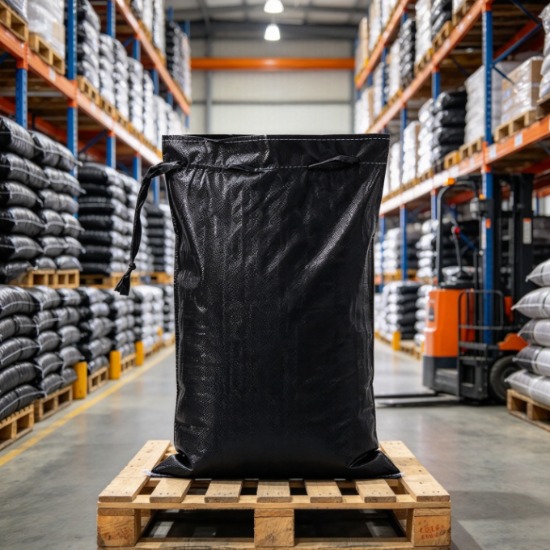
Warehouse conditions add another layer to the whole picture. A level floor gives a stack a completely different starting point than an uneven one, and careful handling creates a very different outcome than repeated dragging or rough, hurried movement.
For businesses using PP woven bags, these details deserve attention well before packaging production even begins. A bag might be designed carefully around a particular product, but its real performance still depends heavily on what happens to it after filling.
Why Does Bag Stability Matter During Warehouse Stacking?
Warehouse stacking involves more than simply placing one bag on top of another and walking away. A filled bag carries weight, holds a particular shape, and makes physical contact with the bags sitting right beside it, so small differences in position can ripple outward and affect the shape of the entire arrangement.
A stable stack tends to be easier to organize and move around a busy warehouse floor. It also makes noticeably better use of the storage space a business actually has available to work with.
An unstable stack creates real, practical headaches on the ground. Bags may shift unexpectedly during handling, product can end up unevenly distributed inside individual packages, and workers end up adjusting the stack far more often than they'd like, which slows down everything else happening around it.
This is exactly why packaging teams often look past the raw material itself when troubleshooting these issues. The real question isn't simply whether a bag is strong enough to hold its contents, but whether the finished bag can maintain a genuinely useful shape once it's filled, placed, stored, moved, and stacked alongside dozens of others.
For PP woven bags, the woven fabric provides the foundation of the whole package, yet the finished shape depends on a lot more than just that fabric alone. Bag construction and the specific production methods used both play a real role in how the package ultimately sits on a pallet or bare warehouse floor.
How Do Bag Dimensions Affect Stacking Stability?
The dimensions of a bag shape how much space it actually occupies once it's sitting in a stack. A bag that's wide and relatively flat behaves quite differently from a narrow bag with a taller, more upright profile, and once filled, these differences become a lot more noticeable to anyone walking past the pallet.
The relationship between a bag's length, width, and height directly affects how neighboring bags meet and settle against each other. When the dimensions genuinely suit the product and the intended stacking arrangement, the bags tend to form a more organized, predictable pattern across the pallet.
When the proportions don't fit the application well, the stack becomes noticeably harder to align cleanly. The contents themselves also change the bag's final shape in ways an empty bag never reveals on its own.
An empty bag might look flat and fairly uniform sitting on a shelf. Once filled, though, the product pushes outward against the fabric and creates the actual working shape the package will carry through the rest of its journey.
This means bag dimensions really need consideration alongside the filling conditions, not as a separate decision made earlier in the process. A manufacturer producing packaging for granular products may need a noticeably different bag shape than one packaging a fine powder or some other material entirely, since contents settle differently and that difference changes how the filled package ultimately rests on the surface below it.
The same basic principle carries straight through into warehouse storage. The bag shouldn't really be thought of as an empty object sitting on a shelf, since its filled form is what actually enters the stack and interacts with everything around it.
For this reason, buyers discussing woven polypropylene bags with a manufacturer do well to explain clearly how the finished bags will actually be stored and arranged once they're filled. The intended stacking method can genuinely influence what bag design ends up being the right fit for that particular job.
How Does the Bottom Structure Affect the Way a Bag Sits?
The bottom of a filled bag has a fairly simple but genuinely important job to do. It connects the whole package with whatever surface sits underneath it, whether that's a wooden pallet or a bare concrete floor.
If the bottom forms a relatively stable base, the bag tends to sit more evenly across that surface. If the bottom is uneven or easily distorted under weight, the package ends up with a far less predictable position once it's placed.
Different bag constructions naturally create different bottom shapes once filled. A sewn bottom, a folded bottom, a valve-style structure, or some other closure arrangement can each change how the lower part of the bag actually behaves after filling.
None of this means one bottom style automatically suits every application across the board. The right choice really depends on the specific product, the filling process, the handling method, and the storage arrangement a business is actually working with day to day.
For warehouse stacking specifically, the bottom needs to work in harmony with the rest of the bag rather than fighting against it. A package with a well-matched body but a poorly suited bottom can still prove genuinely difficult to arrange neatly on a pallet, and the reverse holds true as well.
A stable bottom simply can't compensate on its own for a bag shape that changes dramatically after filling. The entire construction really needs to function as one cohesive package rather than a collection of separately designed parts.
This becomes particularly relevant when businesses purchase Customized PP Woven Fabric for their own in-house bag production. The fabric itself is only one piece of the finished package, since cutting, folding, sewing, and closing all play a real role in shaping the final form that eventually gets stacked.
Manufacturers producing finished bags therefore need to treat the bottom structure as a genuine part of the overall stacking requirement, not an afterthought handled separately from the rest of the design.
How Does the Filling Method Change the Shape of a Bag?
The filling process itself can have a genuinely major effect on how a bag looks and behaves once production wraps up. Two bags made from very similar materials can end up with noticeably different shapes if their filling processes differ even slightly.
When a product enters the bag, it naturally begins to settle into whatever space is available inside. Some contents spread easily and evenly across the bottom, while others tend to form a mound in the middle or shift heavily toward one side.
The final shape a bag takes on depends just as much on the product itself as it does on the filling process being used. A bag filled evenly, with the contents spread out reasonably well, is generally a lot easier to arrange neatly than one where the contents pile up concentrated in a single area.
This is exactly why packaging stability deserves consideration well before the bag ever reaches the warehouse floor. The filling operation and the underlying bag design genuinely need to work together rather than being treated as two unrelated stages of production.
If a product naturally settles toward the bottom of the bag, for instance, the whole bag may widen noticeably after filling. If the contents remain uneven throughout, one side of the bag can end up heavier or standing taller than the other, which changes how it sits.
These kinds of changes directly affect how the next bag placed on top actually settles into position. A stack, after all, is made up of individual packages, but its overall behavior gets shaped by the condition of every single package sitting inside it.
This makes clear communication between bag manufacturers and packaging operators genuinely useful on both sides. A manufacturer needs a real understanding of how the bag will actually be filled, while a packaging operator needs a clear sense of how the bag's construction responds once that filling process actually happens.
When both sides think this through together, choosing a suitable packaging format becomes a lot more straightforward than guessing and adjusting later.
Can Bag Flatness Influence Warehouse Stacking?
Flatness might seem like a fairly minor detail when you're only looking at a single empty bag sitting on a table. Inside a fully stacked warehouse, though, its impact becomes much more noticeable than someone might expect when walking through the space.
A flat bag sits quite differently from one carrying folds, wrinkles, or uneven patches across its surface. When several packages get placed together on the same pallet, these small differences start affecting the actual contact between each layer.
None of this means a woven bag needs to be perfectly rigid or completely smooth to perform well. Woven packaging is flexible by its very nature, and some folding along with a bit of surface movement are simply part of normal handling during transport and storage.
The real issue worth focusing on is whether the finished bag holds a shape that genuinely works with the intended stacking method being used. Bag flatness gets shaped by several production and handling factors along the way, including how the fabric is cut, folded, sewn, packed, and stored before it ever reaches active use.
Printing or lamination applied to the surface can also change how the outer layer behaves once it's under load. Bopp Laminated Woven Bags, for example, carry a laminated outer layer that changes the surface character of the whole package.
This can genuinely help when packaging needs sharp printed graphics for branding or product information, but the bag still needs designing around its actual physical use in a warehouse. The visual appearance of a package and its real behavior once stacked are connected, though they're certainly not the same thing.
A well-designed printed surface doesn't automatically translate into a stable stack sitting on a pallet. The package still needs to perform reliably as a complete structure, regardless of how good it looks from the outside.
How Does the Product Inside the Bag Affect Stability?
The contents sitting inside a bag are genuinely part of the whole stacking equation, not just a passive filling waiting to be shipped out. A bag filled with fine powder behaves quite differently from one filled with larger, chunkier particles, since some products settle naturally into corners while others stay far more mobile during handling.
Product movement can genuinely change the shape of a package well after it's already been placed on a pallet. If the contents shift noticeably toward one side, the whole bag may start leaning, and if the contents settle steadily downward over time, the package can gradually become flatter and wider than it started.
This is exactly why a packaging decision really should begin with the product itself rather than the bag design in isolation. Businesses selecting PP woven packaging do well to think through how the contents actually behave during filling, storage, and repeated movement across a warehouse.
Agricultural products offer a genuinely useful example of this in practice. Fertilizer, seed, feed, and similar materials each carry different filling characteristics, and a bag that works well for one product often needs real adjustments when it gets used for another entirely different one.
The same logic applies just as directly to industrial products moving through a similar supply chain. The packaging needs to contain the product securely while still maintaining a shape that genuinely suits the intended storage process it's headed for.
Product movement can also become a lot more noticeable once bags get moved repeatedly between locations. A package that sits perfectly still in one storage area may behave quite differently after being loaded onto a delivery vehicle, unloaded somewhere new, and stacked all over again in unfamiliar surroundings.
This is why stacking stability needs to be considered throughout the handling cycle, rather than only when a bag is filled and placed down.
How Does the Stacking Pattern Affect the Stability of a Warehouse Stack?
Even a genuinely well-designed bag can turn unstable if it simply gets placed poorly on the pallet. The overall arrangement of bags determines how much real contact exists between each neighboring package sitting in the stack.
Some warehouses place bags in neatly aligned layers, stacked straight on top of each other row by row. Others rely on patterns that let bags overlap or interlock slightly, spreading weight more evenly across a wider footprint.
The right choice really depends on the bag format being used, the product inside, the storage method available, and whatever equipment the warehouse crew has on hand. What really matters across these approaches is keeping the material and performance consistent from one layer to the next.
If bags get placed at different angles or shifting positions throughout a stack, the whole arrangement can gradually lose its shape over time. One uneven layer near the bottom can end up affecting every layer stacked above it, compounding the problem as the pile grows taller.
The base underneath the whole stack matters just as much as the bags themselves. A stack placed on a clean, level surface starts from a genuinely different position than one placed on an uneven or slippery floor that shifts slightly under weight.
Warehouse teams can benefit from thinking about stacking as an ongoing process rather than a single quick action performed once and forgotten. A simple sequence tends to help keep things organized:
- Prepare the storage area properly beforehand.
- Check the condition of the bags before placing them.
- Keep bags positioned consistently across each layer.
- Avoid unnecessary movement once stacking is complete.
- Inspect the stack periodically during storage.
- Adjust the arrangement whenever noticeable movement shows up.
These steps don't replace suitable packaging design on their own, but they work alongside it in practice. For businesses using PP woven bags, the bag construction itself and the warehouse procedure surrounding it really should support the same shared storage objective.
What Warehouse Conditions Can Influence Bag Stability?
The warehouse itself genuinely counts as part of the packaging environment, not just a passive backdrop where bags happen to sit. Temperature and humidity can affect how products behave inside their bags, and moisture in particular may also change the surface condition of the packaging or even the contents themselves.
The floor beneath the stack matters a great deal too. An uneven floor can make the bottom layer of a stack noticeably less stable, while dust or moisture sitting on the surface can change how well the bag actually grips the floor beneath it.
Storage duration tends to matter more than people initially assume walking into a warehouse. A bag can look genuinely different after sitting under load for an extended stretch of time, since the contents may settle further and the overall shape of the package can shift as a result.
This becomes especially relevant when a business stores large quantities of bags for a while before shipment finally goes out. Warehouse layout really should get considered right alongside packaging design rather than treated as a completely separate planning decision.
The distance between different storage areas, the way pallets get moved around the facility, and the equipment used for handling can all affect how often stacks end up disturbed unnecessarily. A genuinely stable packaging system gets built from several connected decisions working together, not from any single fix applied in isolation.
The bag, the product, the warehouse, and the handling process really can't be neatly separated from one another in practice.
What Should Packaging Buyers Check Before Choosing Bags for Warehouse Stacking?
| Consideration | Question to Ask |
|---|---|
| Bag dimensions | Does the filled bag fit the intended stacking arrangement? |
| Bottom structure | Does the base provide a genuinely suitable contact area? |
| Filling method | Will the product settle evenly inside the bag? |
| Bag flatness | Does the finished package hold a workable shape? |
| Product characteristics | Can the contents move or shift noticeably during handling? |
| Stacking method | How will bags be positioned within each layer? |
| Warehouse surface | Is the storage area actually suitable for stable placement? |
| Handling | How will bags be moved once they're already stacked? |
These questions can also help improve communication with a PP Woven Bag Manufacturer from the very beginning of the conversation. Instead of asking only for a particular bag type off a catalog, buyers can walk the supplier through the entire packaging process from start to finish.
A supplier can then understand the intended use a lot more clearly than they would from a bare spec sheet alone. For businesses producing their own bags in-house, purchasing a Woven Fabric Roll can offer another real level of production control over the finished result.
The fabric can move directly into the company's own cutting, printing, sewing, or other downstream processes exactly as needed. The finished bag still needs proper evaluation after production wraps up, though, since a fabric roll might meet every material requirement on paper while the final bag shape still depends heavily on what actually happens during conversion.
This is exactly why warehouse stacking deserves real consideration during packaging development itself, rather than becoming an afterthought once the bags have already been delivered and problems start showing up. A bag's dimensions, bottom structure, filling method, flatness, product movement, stacking arrangement, and the warehouse conditions surrounding it all interact continuously, and changing any single part can shift how the finished package actually behaves once it's sitting in the stack.
For packaging buyers and warehouse teams alike, looking at these factors together offers a much clearer way to connect bag design with the real, everyday storage conditions the packaging will actually face.
Connecting Bag Design With Warehouse Stability
Warehouse stacking stability depends on more than the strength of the woven fabric itself. Bag dimensions, bottom construction, filling conditions, product characteristics, flatness, stacking patterns, and warehouse handling all contribute to how a finished package behaves after filling.
For businesses using PP woven bags, considering these factors together during packaging development can make it easier to match the finished bag with its actual storage and handling environment.




-
 +86-17757792457
+86-15868461338 -
 +8617757792457
-
 [email protected]
[email protected] -
 Guidé Village, Chuiyang, Aojiang Town, Pingyang County, Wenzhou City, Zhejiang Province, China
Copyright ©Zhejiang Hongyang Packaging Co., Ltd.



