


 Guidé Village, Chuiyang, Aojiang Town, Pingyang County, Wenzhou City, Zhejiang Province, China

 English
 Español
 عربى
عربى 中文简体
中文简体
How Do Polypropylene Reusable Bags Support Circular Packaging
Date:Sep 25, 2026
Anyone who's watched a delivery truck pull away from a warehouse loading dock, leaving behind a stack of empty transport bags destined for another shipment next week, has seen a small piece of a much bigger shift happening in packaging. The question businesses ask has quietly changed. It's no longer just "how do we get this product to its destination," but "what happens to the packaging once it gets there, and can it make the trip again."
A package built for a single shipment usually has a short working life, doing its job once and then getting discarded or recycled. A reusable package follows a completely different path, moving between suppliers, warehouses, stores, customers, and distribution points, then circling back into the packaging cycle to start the whole trip over again.
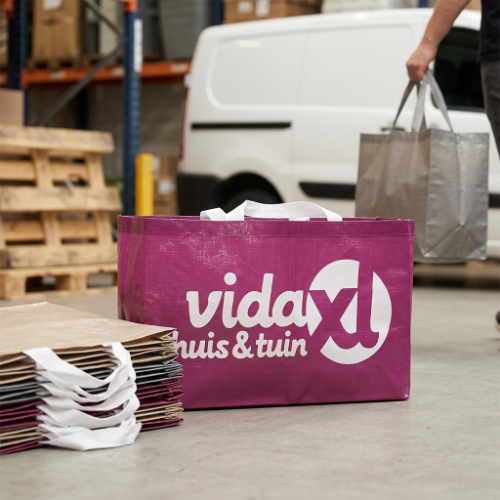
This shift has drawn real attention toward Polypropylene Reusable Bags . They show up across very different packaging situations, from retail shopping bags customers carry home to transport packaging moving between distribution centers and reusable storage applications sitting in a warehouse. Their job isn't simply replacing a disposable bag one-for-one; it's becoming part of a system where the same packaging stays useful across more than one cycle.
That shift genuinely changes how businesses approach packaging design from the ground up. A reusable bag has to fit the product, the handling process, the storage environment, and the return process all at once, while still staying practical for the actual people using it day to day.
The real question isn't simply whether a bag can technically survive being reused a few times. It's whether that bag can function reliably within a repeatable packaging system that people and businesses actually stick with.
What Is Driving the Move Toward Reusable Packaging?
Packaging reduction has become a genuine priority for businesses trying to manage material use more thoughtfully. Removing unnecessary packaging altogether is one approach some companies take, while reusing suitable packaging that's already in circulation is another path entirely.
These two ideas overlap in spirit but aren't quite the same thing in practice. Packaging reduction is about removing material that does not serve a practical purpose, while reusable packaging is about keeping a suitable package in circulation through repeated use cycles.
A reusable packaging system can look deceptively simple from the outside. A product goes into a bag, travels to its destination, and gets removed once it arrives, but that empty bag still needs somewhere to go afterward.
That final step is exactly what separates a true reusable package from an ordinary shopping bag that just happened to survive one extra trip by accident. The packaging genuinely needs a return path built into the system around it.
For a business, that return path can involve collection, inspection, cleaning, storage, and eventual redistribution back into active use. Each of those steps directly affects whether the whole system actually works in practice or just looks good on paper.
This is exactly why circular packaging keeps coming up as a supply chain conversation rather than purely a material selection conversation. A bag can only genuinely support circular use when the process surrounding it gives that bag an actual reason to come back into rotation.
How Do Polypropylene Reusable Bags Fit Into a Circular Packaging System?
The role of a reusable polypropylene bag becomes a lot clearer once you trace the full movement of a package rather than just its moment of delivery. A basic cycle tends to run through a familiar sequence.
1. Product filling
2. Transport
3. Unloading
4. Return
5. Storage
6. Preparation for another use
The bag stays part of the ongoing process rather than exiting the system the moment delivery happens. That distinction genuinely changes how the package gets designed and purchased from the start.
With single-use packaging, the main focus usually sits on getting the product delivered successfully in that one moment. With reusable packaging, the business has to think ahead to what happens once the product gets removed and the bag sits empty.
A polypropylene reusable bag can be designed around exactly this kind of repeated movement. It might carry products between manufacturing facilities, move goods through a distribution network, or travel from a store shelf straight into a customer's home and back again.
The specific application can look wildly different from one business to the next, but the underlying idea stays consistent throughout. The package still has another job waiting once the original product has already been delivered and unpacked.
For businesses, this turns packaging into a genuine piece of logistics planning rather than an afterthought. Instead of asking only "what bag should we use here," the more useful question becomes "how will this particular bag actually move through our system." That small shift in thinking can influence the bag’s design, handling method, storage needs, and even how the business approaches purchasing decisions.
Why Are Reusable Bags Appearing in Retail Shopping?
Retail offers a familiar, everyday example of how reuse quietly becomes part of ordinary packaging habits. A shopping bag used to be viewed as something meant for one short trip from a store checkout to a kitchen counter, nothing more.
Reusable shopping bags change that relationship entirely. The customer brings the same bag back for the next shopping trip instead of grabbing a fresh one at checkout every single time.
This is exactly where Polypropylene Reusable Bags find a genuinely practical role in daily life. A woven polypropylene bag holds up well to repeated carrying, and it also offers a surface for printed product information or store branding that a plain disposable bag never could.
The success of a reusable retail bag, though, depends just as much on customer behavior as it does on the material itself. Shoppers need a practical reason to remember bringing the bag back on their next visit, rather than relying on good intentions that may fade after a few uses.
The bag needs to be easy to store somewhere convenient, whether that's folded in a kitchen drawer or tossed in the trunk of a car. It also needs to fit naturally into normal shopping habits rather than adding an extra step people quickly abandon.
Retailers, for their part, need a simple way to distribute or collect reusable bags whenever their particular business model calls for it. This whole picture shows why reusable packaging can't really be judged on the bag alone, separate from how people actually behave around it.
A reusable shopping bag that's awkward to carry or annoying to store probably won't get reused very often, no matter how well it's built. A genuinely practical bag that slots naturally into daily routines has a much better shot at staying in steady circulation over time.
The same basic principle carries over directly into commercial packaging as well. Reuse works when it's genuinely convenient for the actual people and businesses involved in making it happen, not just theoretically better for the environment.
How Can Reusable Bags Support Packaging Reduction?
Packaging reduction doesn't always mean stripping packaging away entirely and hoping the product survives the trip unprotected. Products still need protection, clear identification, safe handling, and reliable transportation no matter how a business approaches reduction.
The real challenge is avoiding packaging that serves no purpose while keeping the functions the supply chain genuinely depends on. Reusable bags tackle this problem from a different angle than simple elimination.
Instead of producing a brand-new package for every single movement through the supply chain, one package can potentially support several movements over its working life. Picture a fairly simple supply chain to see how this plays out in practice.
A manufacturer ships products to a distributor, who receives the goods and sends the now-empty packaging back. The manufacturer then preps those same bags for the next outgoing shipment, and the packaging stays active inside the supply chain rather than disappearing after one trip.
This kind of model can genuinely cut down on the constant need to produce fresh outer bags for the same recurring type of movement. The actual, practical result depends heavily on how well the reuse system gets organized behind the scenes.
If empty bags prove difficult to collect or awkward to return, the whole system tends to break down regardless of good intentions. That's exactly why packaging reduction and reuse deserve consideration alongside logistics planning, not as a separate conversation happening in isolation.
The material choice itself is really just one small part of the bigger picture here. Businesses also need to examine return routes, available storage space, cleaning practices, day-to-day handling procedures, and how reusable packages get assigned across different locations. A reusable packaging system, at the end of the day, works through careful coordination rather than through the bag's material alone.
What Makes Polypropylene Reusable Bags Useful for Different Applications?
One reason polypropylene bags show up across so many different packaging environments comes down to how flexibly they can be produced for different uses. A retail shopping bag plays a completely different role than a bag moving industrial products between two manufacturing facilities.
Agricultural packaging brings its own separate set of requirements into the mix as well. A reusable bag working inside a warehouse needs to fit smoothly into an existing handling process already running there, while a shopping bag needs to feel comfortable enough for someone to actually carry it home without complaint.
A transport bag, meanwhile, needs to work naturally with however products actually get loaded and unloaded at each stop along the route. This is exactly where customization starts to matter a great deal.
Custom Polypropylene Reusable Bags get developed around one particular packaging workflow rather than treated as some generic, one-size-fits-all product pulled off a shelf. The design conversation tends to cover a lot of practical ground before anything gets manufactured.
That conversation usually touches on how the bag will actually get filled, how someone will carry it, where it'll sit in storage between uses, and how it makes its way back into the cycle once it's empty. It also covers whether the bag needs printed identification, how it gets cleaned or maintained over time, and whether it's meant for one single product or several different ones.
The goal throughout isn't piling on unnecessary features just because they sound appealing on a spec sheet. A reusable package needs to stay genuinely practical above everything else.
If a particular feature doesn't actually support how the bag gets used in real conditions, it just adds complexity without delivering any meaningful benefit in return. This is exactly why reusable packaging design tends to start from the product's actual movement through the supply chain, rather than starting from how the bag looks sitting on a shelf.
How Does Reuse Change Packaging Procurement?
The purchasing process itself shifts noticeably once packaging moves from single-use thinking into repeated-use thinking. With disposable packaging, procurement usually ties directly to shipment volume, where more products moving out the door simply means ordering more bags to match.
Reusable packaging throws another variable into that equation entirely: circulation. The buyer needs enough bags on hand to keep the whole system running smoothly, but they also need a clear sense of how quickly empty bags actually make their way back for reuse.
This makes inventory planning far more tangled up with logistics than it ever was under a simple single-use model. A business working through this might genuinely ask a handful of practical questions before placing an order.
Where exactly are the bags sitting right now? How many are currently in storage waiting to be used? How many are out in active circulation at this very moment? How many are somewhere in transit, waiting to return? How many are ready and cleaned for the next outgoing shipment?
These questions generally do not arise with a straightforward single-use packaging model, since there is no return cycle to consider. They become genuinely relevant the moment the same packaging is expected to keep circulating through the system repeatedly.
This shift also changes the working relationship between a buyer and a PP woven bag manufacturer in meaningful ways. The conversation moves well beyond simply ordering finished bags and starts covering the intended reuse process from the beginning.
A manufacturer, for example, might need to understand upfront whether the bags are headed for retail shopping use, internal facility transport, agricultural product handling, or some other application entirely. The supplier can then walk through a bag design that genuinely matches that intended use rather than guessing. Procurement, in this light, becomes less about simply buying a container to hold a product and more about actively supporting an ongoing packaging operation that keeps running smoothly month after month.
What Role Does Design Play in Reusable Packaging?
A reusable bag has to keep working reliably through repeated use, so even small design decisions end up carrying real practical weight over time. The opening needs to genuinely suit whatever filling process the business relies on day to day.
The carrying method needs to actually match how the bag gets physically moved from one point to another, whether that's by hand, cart, or forklift pallet. The printed area needs to make product identification genuinely easy to spot whenever identification actually matters for that application.
The overall shape needs to fit comfortably within whatever storage and handling space is realistically available at each stop along the route. These details might look pretty minor when you're only examining a single bag sitting on a table.
They start mattering a lot more once that same exact bag makes the same trip through a supply chain dozens or hundreds of times over its working life. For retail shopping bags, design tends to focus heavily on carrying comfort, easy storage at home, and everyday convenience for the shopper.
For industrial packaging, the emphasis shifts noticeably toward handling logistics and smooth integration with existing warehouse procedures already in place. For internal transport specifically, the bag often needs to move cleanly between different departments or facilities without creating extra work or confusion for the staff handling it.
A reusable packaging system, in the end, needs a design that genuinely matches the people actually using it day in and day out. This is exactly where woven polypropylene bags show their real adaptability across such different applications, since the material itself provides a solid, consistent base for many different bag formats, while the final design gets shaped around exactly how that particular package is expected to circulate through its own specific cycle.
How Should Businesses Build a Practical Reuse Cycle?
A reusable packaging program genuinely needs a clear, mapped-out path for the bag to follow after every single use. Without that path clearly defined, reuse stays a nice intention on paper rather than becoming an actual working system on the ground.
Businesses can map out this whole cycle by working through several basic, grounded questions one at a time. Where does the bag's journey actually begin, which identifies the specific filling or packing location it starts from.
Where does the bag go from there, since the transport route largely determines how it gets handled along the way. Where does the product actually get removed, since the receiving point needs a genuinely simple way to separate the product cleanly from its packaging.
Where does that now-empty bag go next, which tends to be the real make-or-break question inside any reusable system. How does the bag get prepared for its next use, since cleaning, inspection, or basic storage prep may be needed depending on what the application actually calls for.
How does it finally make its way back to the next person or facility that needs it, since the return route is really what connects the end of one cycle directly to the start of the next one. A simple, well-organized process tends to make the whole reuse cycle far easier to manage over time.
| Packaging Stage | Reuse Consideration |
|---|---|
| Filling | Does the bag genuinely fit the packing process? |
| Transport | Can it move smoothly through the existing logistics route? |
| Unloading | Can contents come out without unnecessary extra handling? |
| Return | Is there a genuinely practical route for the empty bags? |
| Storage | Can unused bags stay ready and waiting for the next cycle? |
| Reuse | Can the same whole process realistically begin again? |
This approach also helps a business assess whether reusable packaging is actually suitable for a particular product. Not every shipment genuinely needs, or benefits from, the same reusable packaging model.
A reusable system makes far more sense when the packaging has a realistic, practical chance of actually returning and circulating again. For a retail shopping bag, that return might happen naturally through everyday customer behavior and habit.
For commercial packaging, it might happen through scheduled transport running between facilities on a regular basis. For internal logistics specifically, the return route can often get built directly into the company's existing daily operations without much extra effort.
The more naturally that return step fits into a workflow the business already runs, the easier it tends to be to keep the packaging genuinely moving cycle after cycle. This is exactly why Polypropylene Reusable Bags keep coming up more often in conversations about broader reusable packaging systems, rather than being discussed as standalone bags sitting on their own, since their role really begins the moment a product gets packed but doesn't necessarily end the second that package reaches its final destination and gets unpacked.
Building a Reusable Packaging System
Reusable packaging works as part of a complete circulation process rather than as a standalone replacement for single-use packaging. The bag needs to fit the product, handling method, storage environment, transport route, and return process while remaining practical for the people using it.
For businesses considering Polypropylene Reusable Bags, the key considerations extend beyond the bag itself. Product movement, return routes, cleaning, storage, inventory circulation, and everyday handling all need to work together so the same packaging can move through the intended cycle repeatedly.




-
 +86-17757792457
+86-15868461338 -
 +8617757792457
-
 [email protected]
[email protected] -
 Guidé Village, Chuiyang, Aojiang Town, Pingyang County, Wenzhou City, Zhejiang Province, China
Copyright ©Zhejiang Hongyang Packaging Co., Ltd.



