


 Guidé Village, Chuiyang, Aojiang Town, Pingyang County, Wenzhou City, Zhejiang Province, China

 English
 Español
 عربى
 中文简体

Custom Printed Polypropylene Feed Bags: What Buyers Need to Know
Date:Nov 06, 2026
Printed packaging on agricultural bags serves more than decoration. It identifies the contents, displays the brand and conveys handling or regulatory information that buyers and warehouse staff need at a glance. When feed, seed or grain moves through multiple hands—from mill to distributor to farm—clear, durable print reduces mix-ups and supports consistent presentation across a product range. Woven Polypropylene Feed Bags that carry custom graphics therefore combine the mechanical strength of woven fabric with the communication role of surface printing, provided the artwork, bag dimensions and material specification are defined before production begins.
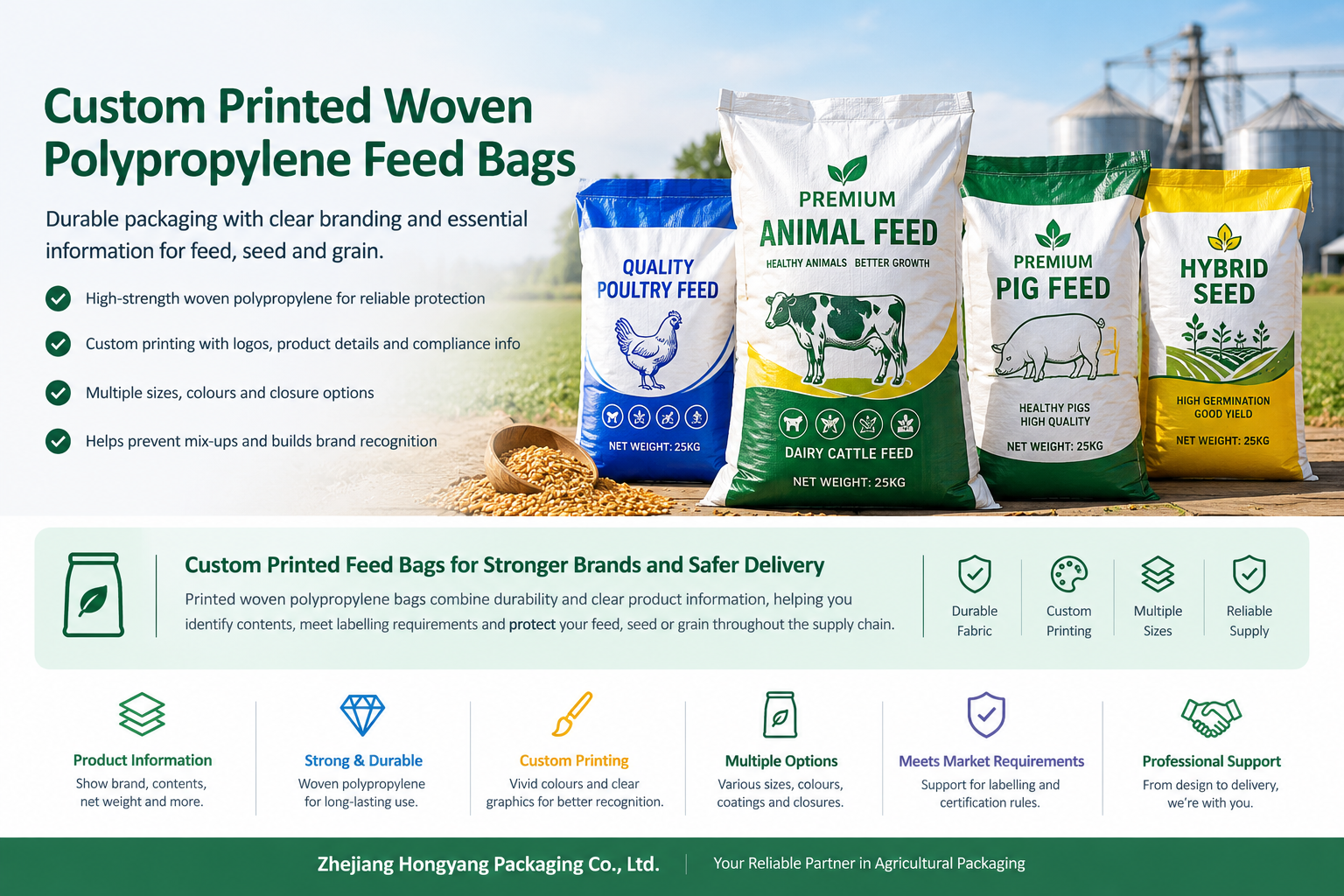
Role of Printed Surfaces in Feed and Grain Distribution
Identification of Contents at a Glance
Bags stacked in a warehouse or loaded onto a truck look similar when they share the same fabric colour and construction. Printed product names, grades and net-weight statements allow staff to select the correct item without opening the package. The same visibility helps end users confirm they have received the intended feed formulation or seed variety.
Display of Brand and Product Information
A clearly rendered logo and supporting text reinforce brand recognition on the shelf or in the field. Nutritional notes, usage directions and batch codes can be incorporated into the print layout so that essential data travel with the product. Legibility after handling and exposure to dust or moisture depends on ink adhesion and on the contrast between the print and the fabric background.
Consistency Across Related Product Lines
When several feed or seed products share a common bag style, a coordinated print system—consistent logo placement, colour palette and information hierarchy—makes the range recognisable as a family. That consistency simplifies ordering and reduces the chance that a redesigned bag will be mistaken for a different product.
Planning Steps Before Customisation Begins
Determination of Bag Dimensions for the Product
The volume and bulk density of the feed, seed or grain determine the required capacity. Length, width and the style of the gusset or side panel are chosen so that the filled bag is stable on a pallet and manageable for manual or mechanical handling. Ordering a size that is only marginally larger than necessary wastes material; a size that is too small risks overfilling and seam stress.
Preparation of Artwork, Logos and Text Elements
Artwork is supplied in a format and resolution suitable for the printing method that will be used. Logos, product names and mandatory statements are arranged so that critical information remains readable after the bag is filled and stacked. Placement relative to seams, fold lines and the top closure is checked so that nothing important is obscured or distorted.
Selection of Print Colours and Overall Layout
The number of colours and their arrangement affect both visual impact and production complexity. High-contrast combinations improve legibility from a distance. Layouts that leave adequate clear space around text and logos avoid a crowded appearance once the bag is under the tension of a full load.
Confirmation of Labelling Rules for the Destination Market
Some markets require specific language, font sizes, allergen statements or certification marks on animal-feed or seed packaging. These requirements are identified early and incorporated into the artwork so that the finished bag complies with the rules of the countries in which it will be sold or distributed.
Practical Factors That Affect Printed Bag Performance
Legibility and Placement of the Print
Print that sits too close to a fold or a stitched seam can become difficult to read once the bag is filled. Test layouts on a sample of the actual fabric show how the ink sits on the woven surface and whether the chosen colours remain distinct under warehouse lighting.
Handling and Storage Conditions the Bags Will Encounter
Filled bags may be dragged, stacked several layers high or stored in dusty or humid environments. The print and the fabric must withstand those conditions without excessive fading, scuffing or delamination. Where bags will be exposed to outdoor weather for extended periods, the durability of the ink system is reviewed against that exposure.
Artwork Approval and Evaluation of Pre-Production Samples
A physical sample printed with the approved artwork allows the buyer to verify colour, registration and the position of every element before bulk production starts. Changes requested after the sample is signed off usually affect cost and schedule; thorough review at the sample stage reduces later revisions.
Woven Polypropylene Construction and Custom Print Options
Fabric Structure Suited to Agricultural Packaging
Woven polypropylene tapes provide tensile strength and resistance to tearing that suit the weight and handling of feed, seed and grain. The fabric can be coated or left uncoated according to the need for moisture resistance and print receptivity. Seam construction and the type of closure—open mouth, valve or another style—are selected to match the filling method and the required security of the package.
Custom Printing for Brand and Product Identification
Print is applied to one or more faces of the bag so that the logo, product name and supporting information remain visible in normal storage and transport orientations. The printing method and the ink system are chosen for adhesion to the polypropylene surface and for the level of detail required by the artwork.
Specifications That Must Be Fixed Before Production
Bag size, fabric weight, coating if any, print colours, artwork placement, closure type and packing method for shipment are all confirmed in a written specification. Ambiguity in any of these items leads to mismatched expectations when the bulk order arrives.
Discussion of Requirements With the Supplying Team
Buyers who provide complete information on product density, target fill weight, preferred dimensions, artwork files and destination-market labelling rules enable the supplier to propose a bag construction and print layout that fit the real use case. Early discussion also reveals whether special testing or documentation will be needed.
Preparing a Clear Specification for Quotation
Data Buyers Should Supply When Requesting Pricing
A useful enquiry includes the intended contents, approximate fill weight, preferred bag dimensions, fabric preferences if known, print colours and artwork, required certifications or labelling statements, order quantity and delivery destination. The more complete the brief, the more accurately the quotation reflects the final product.
Final Confirmation of Artwork, Quantity and Production Details
Before the order is released to production, the approved artwork, the exact quantity, the packing configuration and any special inspection requirements are restated in writing. This confirmation becomes the reference against which the finished bags are checked.
Overview of Planning Elements for Printed Feed Packaging
| Planning Element | Purpose in the Packaging Programme | Information to Confirm |
|---|---|---|
| Bag dimensions and capacity | Match volume and handling to the product | Fill weight, bulk density, preferred length and width |
| Artwork and mandatory text | Identify product and meet labelling rules | Logo files, product name, regulatory statements |
| Print colours and layout | Ensure legibility and brand consistency | Colour count, placement relative to seams |
| Fabric and closure type | Provide strength and suitable filling method | Coated or uncoated, open mouth or valve style |
| Handling and storage conditions | Preserve print and bag integrity in use | Stack height, exposure to dust, moisture or sun |
| Sample approval | Verify appearance and construction before bulk run | Physical sample with final artwork and materials |
| Order quantity and packing | Align production and logistics with demand | Quantity, carton or bale configuration, destination |
Aligning Print, Dimensions and Construction With Agricultural Needs
Custom-printed woven bags for feed, seed and grain succeed when the fabric strength, the bag size and the printed information are specified together. Clear artwork, confirmed dimensions and an understanding of handling conditions reduce the risk of illegible print or poorly fitting bags once the product reaches the warehouse or the farm. Zhejiang Hongyang Packaging Co., Ltd. produces woven polypropylene bags for agricultural packaging applications. Review of available fabric constructions, size options, printing methods and closure styles against the intended product, fill weight and destination-market requirements allows selection of bags that combine durable construction with clear, functional identification.




-
 +86-17757792457
+86-15868461338 -
 +8617757792457
-
 [email protected]
 -
 Guidé Village, Chuiyang, Aojiang Town, Pingyang County, Wenzhou City, Zhejiang Province, China
Copyright ©Zhejiang Hongyang Packaging Co., Ltd.


