


 Guidé Village, Chuiyang, Aojiang Town, Pingyang County, Wenzhou City, Zhejiang Province, China

 English
 Español
 عربى
عربى 中文简体
中文简体
What Factors Matter When Choosing PP for Woven Bags
Date:Aug 14, 2026
Sourcing the wrong PP material for woven bag production creates problems that do not always surface immediately. A fabric that processes well in initial runs may show inconsistent tensile performance across larger batches. A material that tests acceptable in dry conditions may degrade faster than expected under UV exposure in outdoor storage. And a supplier that delivers reliably on standard grades may struggle when the specification shifts toward a customized construction. For manufacturers and procurement teams working with PP Woven Fabric China supply chains, the decision about which polypropylene material to use — and which properties to prioritize — is more consequential than it might appear on the surface.
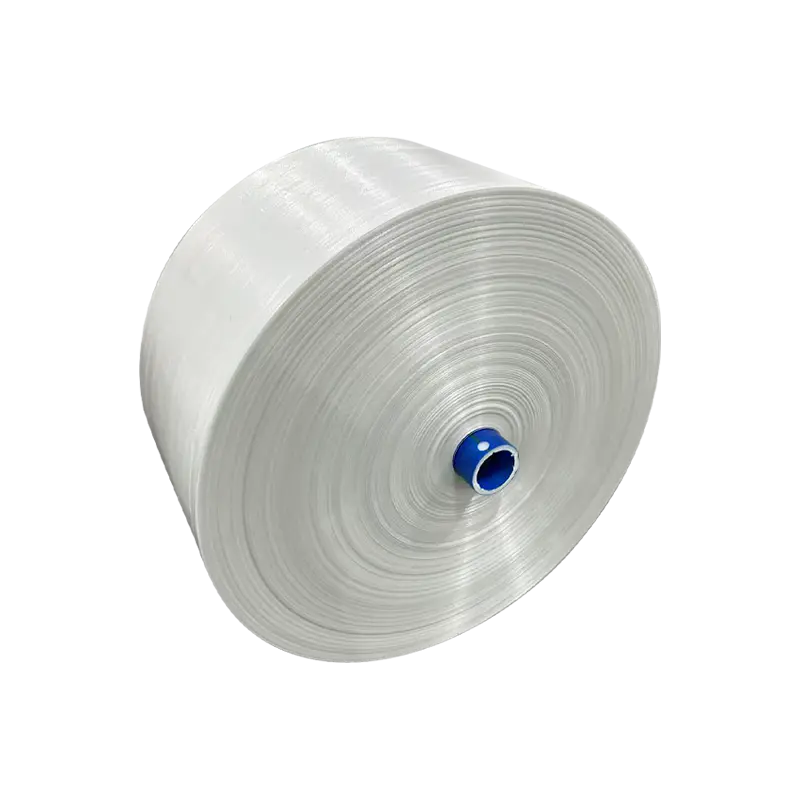
Getting this right matters across the entire product lifecycle. The fabric is the foundation; everything downstream — bag strength, surface compatibility for lamination, print adhesion, fill performance — depends on the material choices made at this stage.
Why Polypropylene Remains the Dominant Material for Woven Bags
Polypropylene has held its position as the standard raw material for industrial woven bags because its combination of properties maps well onto what bulk packaging applications actually require.It is lightweight, remains chemically stable in common storage environments, and can be processed into flat strips that are woven into fabric with reliable structural support.
The processing characteristics also matter. PP melts cleanly, extrudes consistently at production speeds suited for industrial output, and accepts a range of additive treatments — UV stabilizers, colorants, anti-static compounds — without major process changes. That adaptability is part of why the same material base serves such a wide range of applications, from grain storage bags to cement packaging to premium food-grade constructions.
That said, not all polypropylene performs the same way in woven bag production. The grade of resin, the extrusion parameters, the strip width and thickness, and the weave density all interact to produce a finished fabric with specific performance characteristics. Selecting materials without clearly defining these factors can create variations between batches, which is a common challenge procurement teams face during sourcing.
What Raw Material Factors Affect PP Fabric Quality?
Resin Grade and Melt Flow Rate
Polypropylene resin is not a single product — it is available across a range of grades with different melt flow rates, molecular structures, and additive profiles. The melt flow rate determines how the polymer behaves during extrusion: too high, and the strips may lack the tensile strength needed for demanding applications; too low, and processing becomes difficult and output rates fall.
For woven bag production, the resin grade needs to be specified to match the intended application. A bag designed for heavy industrial loads requires resin with different processing characteristics than a light-duty promotional bag. When procurement teams accept whatever resin grade the supplier offers without specifying requirements, the result is often fabric that performs adequately on a sample run but inconsistently across production batches.
Additive Treatments and Their Effect on Performance
Raw polypropylene without additive treatment degrades under UV exposure at a rate that makes outdoor storage impractical for extended periods. UV stabilizer additives extend the material's resistance to photodegradation — but the effectiveness depends on the additive type, concentration, and how evenly it is distributed through the resin.
For agricultural packaging used in open-air storage, or bags transported in uncovered vehicles, UV stabilization is not an optional upgrade. It is a specification requirement. Similarly, anti-static additives matter for certain chemical powder applications where static charge creates handling safety concerns.
Understanding which additives are included in the base material — and at what concentration — is part of specifying a fabric properly rather than assuming the finished bag will perform to unstated assumptions.
Strip Width, Thickness, and Weave Density
The polypropylene strip dimensions and weave density are key factors that influence finished fabric weight (GSM) and the structural characteristics associated with it. Wider strips at the same weave density produce a heavier, stronger fabric with less air permeability. Narrower strips woven more tightly produce a fabric with finer texture and better containment of small particles.
For fine powder products — chemical fertilizers, food-grade starches, cement — a tighter weave reduces the risk of product working through the fabric under vibration during transport. For breathable agricultural products like grain and seeds, a looser weave at appropriate fabric weight allows the air exchange that prevents internal condensation.
How Does Application Drive Material Selection?
The material specification cannot be finalized without knowing the application. A PP Fabric Bag designed for fertilizer export has different requirements than one designed for bulk grain storage or retail food packaging. Understanding the application demands upfront prevents the cost and disruption of having to revise a specification after production has begun.
Agricultural Packaging
Grain and seed packaging needs breathability. A plain woven construction at an appropriate fabric weight allows moisture generated internally by the product to escape through the bag wall. Using a tighter weave, or adding a lamination layer that blocks air movement, creates the conditions for condensation and spoilage inside the bag.
For fertilizer and other hygroscopic agricultural chemicals, the requirement reverses — the bag needs to keep ambient moisture out rather than letting product moisture out. Laminated Woven Bags are the standard configuration here, combining the structural strength of the woven fabric with a film layer that blocks moisture penetration.
Construction and Industrial Materials
Cement, sand, and construction aggregates impose heavy fill weights and rough handling conditions. High fabric weight, tight weave density for containment, and strong seam construction are the relevant specification parameters. The bag also needs to handle the mechanical stress of automated filling equipment, which creates internal pressure during the fill cycle that lower-weight fabrics may not manage consistently.
Food Ingredients and Consumer Products
Food-grade applications add a dimension that purely functional industrial bags do not face: surface quality and contamination risk. The fabric must be produced from food-contact-appropriate resin grades without additives that would be unsuitable for food proximity. The laminated surface needs to support the printed product information, nutritional data, and brand graphics that retail food packaging requires.
A PP Fabric Bag for this segment looks similar to a construction aggregate bag at the material level but requires a completely different specification at the additive, weave, and surface treatment level.
When Is Customized PP Woven Fabric the Right Choice?
Standard fabric grades and constructions cover a wide range of applications adequately. But there is a growing segment of industrial packaging requirements that standard formats do not address without specification adjustment.
Customized PP Woven Fabric becomes relevant when:
- The fill product has unusual particle size characteristics that require a specific weave density not available in standard constructions
- The application involves outdoor UV exposure for extended periods, and standard UV stabilizer concentrations are insufficient
- The bag dimensions fall outside common standard sizes, requiring fabric produced to specific width specifications
- The brand requires a specific base color or colorant concentration that affects the fabric appearance under printing
- The export market has regulatory requirements for material additives or certifications that standard grades do not carry
The case for customized production is strongest in high-volume applications where the return from a precisely matched specification justifies the setup cost, and where batch-to-batch consistency in the custom specification is critical to downstream production quality.
For lower-volume applications, the economics often point toward finding the standard grade that comes closest to the requirement and adjusting other variables — lamination, liner inclusion, closure type — to compensate.
What Role Does Lamination Play in PP Fabric Selection?
Lamination changes what the fabric needs to do. A plain woven fabric that will be used as-is needs to provide all the protection the application requires — breathability or moisture containment — through the woven structure itself. A fabric that will receive a laminated coating can rely on that coating layer for surface protection and moisture management, which changes the specification priorities for the base fabric.
Laminated Woven Bags: Material Implications
For Laminated Woven Bags, the key compatibility consideration is the adhesion between the polypropylene fabric and the lamination film or paper layer. Surface treatment of the fabric — corona treatment or flame treatment — improves adhesion by changing the surface energy of the polypropylene. Without proper surface preparation, the lamination layer may not adhere evenly, which can cause separation issues during use.
The fabric weight specification for a laminated bag can sometimes be adjusted relative to a plain woven construction, because the lamination layer contributes some surface protection that the plain fabric would otherwise need to provide through its own density. This is an optimization that requires knowing the full construction specification upfront rather than adding lamination as an afterthought.
Print Compatibility
Printing onto laminated woven bag surfaces requires the outer surface layer — whether polypropylene film or kraft paper — to be compatible with the ink and printing process being used. The base fabric specification influences what lamination is compatible, which in turn influences what print process and ink types are viable.
For bags with detailed multi-color graphics or high color-accuracy requirements, specifying the full construction — fabric, lamination, and print process — as an integrated system rather than as separate decisions produces more consistent results.
Comparing PP Fabric Configurations for Common Applications
| Application | Fabric Weight | Weave Density | Additive Need | Lamination | Liner |
|---|---|---|---|---|---|
| Grain and seed storage | Medium | Open weave | UV stabilizer for outdoor use | None | None |
| Fertilizer export | Medium to heavy | Tight | UV stabilizer | Film lamination | Optional PE |
| Cement and aggregates | Heavy | Tight | Standard | None or minimal | None |
| Rice and food retail | Medium | Standard | Food-grade resin | BOPP or paper lamination | Food-grade PE |
| Chemical powders | Medium to heavy | Tight | Chemical resistance check | Film lamination | PE liner |
| Promotional and retail | Light to medium | Standard | Colorant | Film or paper lamination | None |
What the comparison above makes clear is that no single fabric specification covers all applications. The right choice depends on the intersection of structural requirements, surface treatment needs, and any regulatory or food-safety considerations that apply to the product being packed.
How Does Sourcing from PP Woven Fabric China Suppliers Work in Practice?
China's manufacturing base for woven polypropylene fabric is broad and technically capable, but the depth of that capability varies substantially across suppliers. Understanding what to look for beyond basic price and minimum order quantities separates productive sourcing relationships from ones that produce recurring quality problems.
What to Verify Before Committing to a Supplier
Production capability for the specific resin grade and additive profile required — not just the general category of woven PP fabric — is the starting verification. A supplier that produces only standard commodity grades may not be able to maintain a customized specification consistently across repeated orders.
Quality documentation is the next consideration. Batch testing records for fabric weight, tensile strength by direction, and weave density consistency show whether the supplier controls these variables systematically. Requesting documentation from multiple recent batches — rather than a single sample test certificate — gives a more accurate picture of production consistency.
For Customized PP Woven Fabric, the supplier's ability to maintain the specification across batches — not just produce it correctly on the initial run — determines whether the customization actually delivers the intended benefit at scale.
Export Documentation and Compliance
For international buyers, a supplier's familiarity with export documentation requirements matters as much as production capability. Phytosanitary certificates, fumigation records, material compliance documentation for destination-country regulations, and food-contact certifications where required all need to be handled competently. Suppliers without established export processes require buyers to manage compliance gaps that an experienced supplier would handle as standard practice.
Matching Surface Treatment to End-Use Requirements
Surface treatment is often treated as a secondary decision but actually affects several downstream properties that matter in use.
Corona and Flame Treatment
Both corona and flame treatment change the surface energy of the polypropylene fabric to improve adhesion for lamination and printing. The treatment level needs to be matched to the lamination or printing process being used. Under-treatment produces adhesion failures; excessive treatment can degrade the surface in ways that affect print quality.
For Laminated Woven Bags that will carry detailed printed graphics, confirming the surface treatment specification and verifying it in the sample before production is a step that prevents costly print quality issues from emerging at the production stage.
Color and Appearance
Base fabric color affects the appearance of the finished bag, particularly when printing with lighter inks or producing bags with transparent lamination layers where the fabric color shows through. Standard white or natural fabric colors suit many applications, while certain brand requirements may require a tinted base fabric, which should be clearly defined within the Customized PP Woven Fabric specification.
Making the Right Sourcing Decision for Your Application
The material decision for PP woven bags is not separate from the application decision — it is the same decision made at an earlier stage. A buyer who specifies the application requirements clearly, including fill product characteristics, storage and transit conditions, surface treatment needs, and any regulatory requirements, gives a supplier the information needed to recommend an appropriate fabric configuration.
Zhejiang Hongyang Packaging Co., Ltd. works with woven bag procurement teams and packaging manufacturers to match PP fabric specifications to real-world application requirements, including Customized PP Woven Fabric configurations for non-standard applications. Whether the requirement involves a plain woven construction for breathable bulk goods, a tight-weave fabric for fine powder containment, or a lamination-compatible surface treatment for BOPP or Paper Laminated Woven Bags, the material specification process is supported from initial inquiry through production documentation. Buyers working through an application specification or evaluating whether a standard or customized fabric grade is more appropriate for their needs are welcome to reach out directly for technical consultation and samples.




-
 +86-17757792457
+86-15868461338 -
 +8617757792457
-
 [email protected]
[email protected] -
 Guidé Village, Chuiyang, Aojiang Town, Pingyang County, Wenzhou City, Zhejiang Province, China
Copyright ©Zhejiang Hongyang Packaging Co., Ltd.



