


 Guidé Village, Chuiyang, Aojiang Town, Pingyang County, Wenzhou City, Zhejiang Province, China

 English
 Español
 عربى
عربى 中文简体
中文简体
PP Woven Bag vs Laminated PP Bag: Guide to Choosing
Date:May 29, 2026
Choosing between a standard PP Woven Bag and a laminated version is one of those decisions that looks simple on the surface but carries real consequences down the supply chain. Pick the wrong type and you end up with product damaged by moisture, poor print quality on shelf, or unnecessary cost on runs where a plain bag would have done the job. Neither option is universally right — the correct answer depends on what you are packing, where it is going, and what the bag needs to survive along the way.
What Is a PP Woven Bag?
A PP Woven Bag is made by extruding polypropylene resin into flat strips, weaving those strips into a fabric, then cutting and sewing the fabric into a finished container. The structure is both light and strong, which is why it handles bulk commodities as well as it does.
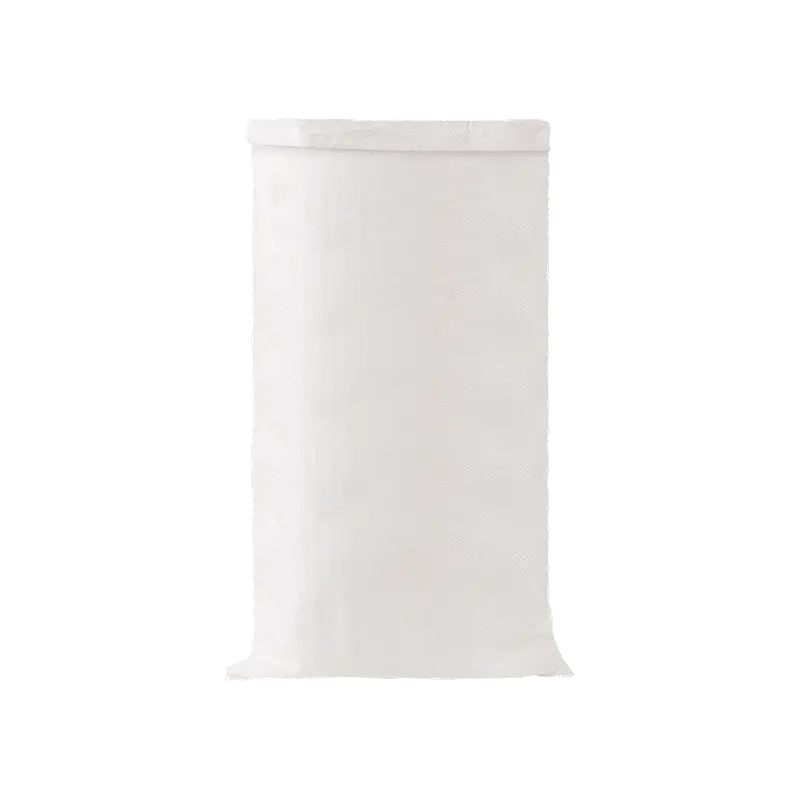
The weave itself is what gives it durability. Unlike a plain film that tears in a straight line when punctured, the interlocked structure spreads force across the fabric surface. That makes it resistant to the kind of rough handling that happens in warehouses, on trucks, and on loading docks.
Breathability is another property that matters in practice. The open weave lets air move through, which keeps grain, seeds, and other respiring products in better condition during storage than they would be in a sealed format.
What Is a Laminated PP Woven Bag?
Lamination adds a layer — usually a polypropylene or polyethylene film — bonded directly to the outer surface of the woven fabric. That one addition changes the bag's behavior in several meaningful ways.
Moisture can no longer penetrate through the fabric. The outer surface becomes smooth rather than textured, which opens up a much wider range of printing options. The bag also has a cleaner, more finished appearance that suits retail-visible packaging.
BOPP laminated bags are a common variant. The lamination process uses biaxially oriented polypropylene film, which produces a particularly printable surface — sharper graphics, more vivid colors, better ink adhesion than a raw woven fabric could support.
Worth noting: lamination does add weight and cost. Whether that trade-off makes sense depends entirely on the application.
Key Differences Between PP Woven Bags and Laminated PP Woven Bags
The comparison comes down to a handful of functional properties. Each one pulls toward different applications.
| Feature | PP Woven Bag | Laminated PP Woven Bag |
|---|---|---|
| Moisture Resistance | Moderate | High |
| Breathability | High | Low |
| Printing Quality | Standard | Sharp, multi-color |
| Surface Appearance | Textured, plain | Smooth, finished |
| Cost | Lower | Higher |
| Weight | Lighter | Slightly heavier |
| Durability | Good | Stronger with film layer |
| Recyclability | Straightforward | More complex (multi-layer) |
Moisture Resistance
The plain woven structure does not block moisture — it slows it. For dry products in controlled storage environments, that may be acceptable. For anything hygroscopic, moisture-sensitive, or destined for humid climates, the gap between the two formats becomes a genuine product safety issue.
Laminated bags form a physical barrier. Moisture cannot move through the film layer, which is why they are standard for fertilizer, chemicals, and powder food ingredients.
Does Breathability Still Matter?
It does — for the right products. Grain, seeds, and fresh vegetables generate internal humidity as they respire. Sealing them in a non-breathable bag creates condensation and accelerates spoilage. An unlaminated woven bag is the correct choice precisely because it allows that moisture to escape.
The moment lamination enters the picture, that ventilation stops. Which is fine for cement or chemical powder. Not fine for living agricultural commodities.
Printing and Appearance
On a raw woven surface, printing is limited. The texture interferes with fine detail, and the number of usable colors is lower. For plain utility bags — sand, construction aggregate, bulk grain — that limitation rarely matters.
Laminated surfaces change that equation entirely. Multi-color graphics, product photography, brand logos with fine detail: all of this becomes achievable. For any product where the bag is part of the brand experience, the appearance difference between the two formats is immediately visible.
When to Use Each Type
Use a Standard PP Woven Bag For:
- Rice and cereal grains requiring airflow during storage
- Seeds and agricultural commodities sensitive to condensation
- Sand, gravel, and construction aggregates
- Animal feed stored in dry warehouse conditions
- Applications where cost per unit is a driving factor
- Products where plain, functional packaging is sufficient
Use a Laminated PP Woven Bag For:
- Fertilizer and chemical powders requiring moisture protection
- Cement and dry construction compounds
- Flour, sugar, starch, and other food-grade dry ingredients
- Export packaging where humidity during transit is a concern
- Any product where print quality and shelf appearance matter
- Wholesale PP Woven Bag applications requiring branded presentation
The practical way to think about it: if moisture is a threat to the product, choose laminated. If the product needs to breathe, choose plain. If both concerns apply simultaneously, the solution is usually a plain outer bag with a PE inner liner — which keeps ventilation possible while still protecting against contamination.
Advantages and Disadvantages of Each Format
Advantages of Standard PP Woven Bags
- Lower per-unit cost makes them practical for high-volume runs
- Natural breathability suits agricultural and organic commodities
- Lighter weight, which affects freight cost at scale
- Simpler recycling process with no multi-layer separation
Disadvantages of Standard PP Woven Bags
- Limited moisture barrier — unsuitable for hygroscopic products
- Print options are restricted in color range and detail
- Plain appearance does not support retail branding
- Less appropriate for humid storage or transit environments
Advantages of Laminated PP Woven Bags
- Strong moisture resistance for sensitive contents
- Smooth, printable surface supports detailed branding
- More polished appearance for retail or export packaging
- Film layer adds a degree of extra durability against abrasion
Disadvantages of Laminated PP Woven Bags
- Higher production cost relative to unlaminated versions
- Not suitable for breathable product storage
- Multi-material construction complicates recycling
- Adds marginal weight, which accumulates across large shipments
How to Choose Between PP Woven and Laminated PP Woven Bags
There is no single right answer here. The decision is a function of several variables, and getting it wrong in either direction has consequences. A few questions that tend to clarify the choice quickly:
Does your product absorb moisture? Fertilizer, cement, starch, and chemical powders are vulnerable to humidity. Laminated is the appropriate format.
Does your product need to breathe? Grain, seeds, and fresh agricultural produce generate internal moisture. Unlaminated is the correct choice.
Will the bag be seen by the end consumer? If presentation matters — shelf visibility, brand differentiation, retail aesthetics — laminated with BOPP printing is the practical path.
What are the storage and transit conditions? Products moving through humid climates or open container shipping face different demands than those stored in climate-controlled warehouses.
Is unit cost a binding constraint? For very high volumes where the bag is purely functional, the cost differential between laminated and plain adds up fast. If the product does not need moisture protection, plain is the economical call.
If your requirement is a Kraft Paper Laminated PP Woven Bag — which combines a paper outer layer with the structural integrity of the woven fabric — that is a separate format suited to markets where paper aesthetics are expected but a paper-only construction would not survive the application.
Customization Options for Both Formats
Regardless of which format fits the application, both standard and laminated Woven Polypropylene PP Bags can be produced in a wide range of configurations.
For standard PP Woven Bags:
- Fabric weight (GSM) adjusted to load requirements
- Gusseted or flat construction
- Sewn closure or heat-seal finish
- Inner PE liner for products needing additional moisture protection
- UV-stabilized fabric for outdoor storage
For laminated PP Woven Bags:
- BOPP lamination for print-quality surface
- Kraft paper outer layer for retail presentation
- Valve closure for automated filling lines
- Custom bag dimensions based on fill volume
- Multi-color custom printing with proof approval process
- Food-grade inner liner for dry food applications
Both formats support OEM printing, custom sizing, and export documentation. A Laminated PP Woven Bag Manufacturer that handles export regularly will have the documentation processes in place — phytosanitary certificates, fumigation records, and destination-country compliance requirements — without needing to be guided through them.
Frequently Asked Questions
Are Laminated PP Woven Bags Waterproof?
The laminated film layer provides strong resistance to moisture penetration. For typical storage and transit conditions, this works as intended. A PE inner liner adds further protection for products where any moisture contact is unacceptable.
Are Laminated Bags Recyclable?
They can be recycled, but the multi-layer construction makes the process more involved than single-material bags. The film layer requires separation from the woven fabric in many recycling streams. Unlaminated bags are simpler to process.
Which Bag Is Better for Fertilizer Packaging?
Laminated is the standard choice. Fertilizer is hygroscopic — it draws moisture from the air — and it is often stored outdoors or in partially exposed conditions. The moisture barrier that lamination provides is not optional in this application.
Do Laminated Bags Cost More?
Yes. The film bonding step, the lamination material itself, and the more involved production process all contribute to a higher per-unit cost compared to plain woven bags. For applications where moisture protection or print quality is needed, that cost difference is justified. For plain bulk storage where neither is required, it is not.
Can Laminated PP Bags Be Custom Printed?
Yes, and the results are considerably sharper than what is achievable on unlaminated fabric. BOPP lamination in particular supports detailed multi-color graphics and is the standard surface for bags where branding or product information needs to be clearly legible.
Which Format Suits Export Packaging?
Laminated is generally preferred for export. Products in transit are exposed to variable humidity, temperature swings, and handling conditions that plain woven fabric is less equipped to handle. The sealed surface of a laminated bag provides a more reliable barrier across longer, less controlled supply chains.
What Is the Difference Between Laminated and Non-Woven PP Bags?
Non-woven PP uses bonded fibers rather than an interlocked weave, producing a softer, lower-strength material suited to light consumer applications. Neither standard nor laminated woven PP bags are comparable to non-woven in construction — the woven structure delivers substantially greater load capacity.
Get Custom PP Woven Bag Solutions from a Manufacturer
Knowing the difference between formats is useful. Translating that into a production-ready specification takes a manufacturer who can advise on GSM selection, lamination options, liner inclusion, and closure design based on the actual product being packed. Both standard and laminated formats are available in custom configurations — dimensions, print colors, fabric weight, liner type, and closure method can all be specified to match the application rather than approximating it with a catalog item. Zhejiang Hongyang Packaging Co., Ltd. produces woven polypropylene packaging across both formats, including laminated and unlaminated variants, kraft paper laminated constructions, valve bags, gusseted options, and custom-printed solutions for agriculture, food, construction, and chemical applications. Export documentation is handled in-house. Buyers with a defined spec — or who are still working through the laminated vs. standard decision — are welcome to reach out directly for a detailed response and sample evaluation.




-
 +86-17757792457
+86-15868461338 -
 +8617757792457
-
 [email protected]
[email protected] -
 Guidé Village, Chuiyang, Aojiang Town, Pingyang County, Wenzhou City, Zhejiang Province, China
Copyright ©Zhejiang Hongyang Packaging Co., Ltd.



