


 Guidé Village, Chuiyang, Aojiang Town, Pingyang County, Wenzhou City, Zhejiang Province, China

 English
 Español
 عربى
عربى 中文简体
中文简体
How PP Woven Bags Support Cost-Effective Industrial Packaging
Date:Jul 10, 2026
Industrial packaging budgets absorb pressure from every direction — rising freight costs, tighter margins on bulk commodities, and the recurring expense of damaged goods that should have arrived intact. When a bag tears at the seam halfway through a pallet, or moisture compromises a shipment that was stored correctly but packaged inadequately, the cost does not just appear on one line of the accounts. It shows up as product loss, rework time, customer claims, and the eventual decision to reorder packaging that should have been specified better the first time. Woven polypropylene (PP) bags help address many of these packaging challenges without the added expense associated with more complex packaging options. Understanding their role in reducing these issues provides a practical basis for evaluating packaging costs. The cost efficiency of this format is not simply a function of low price per unit. It comes from a combination of material properties, reusability, weight efficiency, and adaptability across applications that collectively reduce the total cost of packaging across a supply chain. Getting those properties to work for a specific application requires knowing what to specify and why.
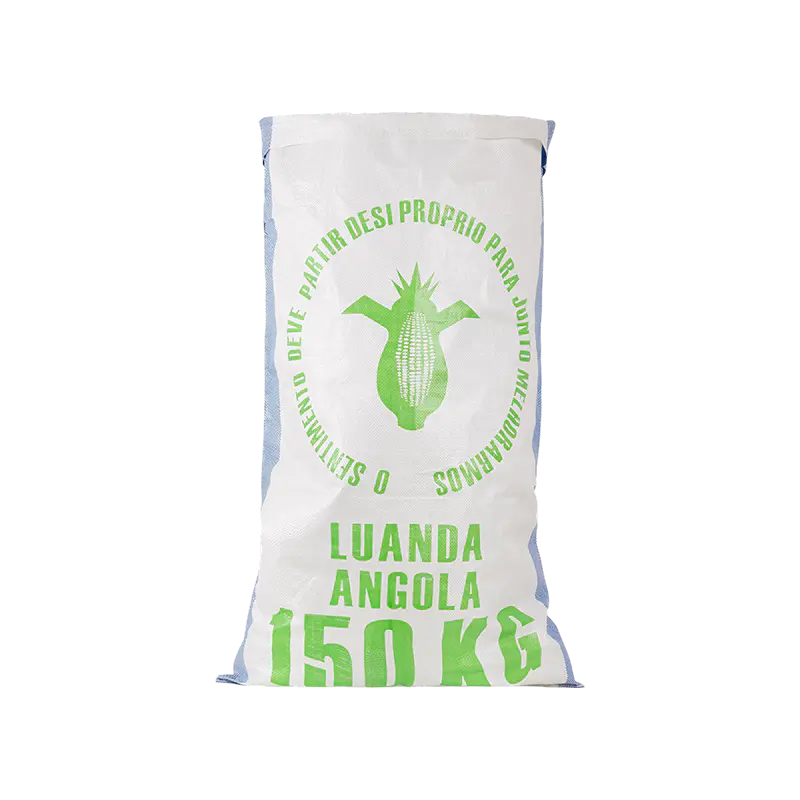
What Makes Woven Polypropylene PP Bags Cost-Efficient for Industrial Use?
The cost argument for this format rests on several structural advantages that compound across bulk orders.
Material Efficiency
Polypropylene as a base material is lightweight relative to the structural load it supports. That weight efficiency matters in shipping: every gram of packaging weight that travels with the product adds freight cost across the lifetime of the order. Paper-based packaging offers comparable mechanical properties to plain woven PP in some applications, but with higher sensitivity to moisture and a lower strength-to-weight ratio.
The woven construction amplifies this advantage. Weaving polypropylene strips into an interlocked fabric creates structural strength that exceeds what a comparable weight of plain film would deliver. The material is doing more work per gram, which is how cost efficiency in packaging actually works in practice.
Durability That Reduces Loss Rates
A bag that fails in transit or at the filling line is not a cheap bag — it is an expensive one. The upfront unit cost becomes irrelevant when the actual cost includes product loss, downtime, and replacement. Woven polypropylene resists tearing, abrasion, and puncture in ways that alternative materials at similar price points typically do not. The interlocked weave distributes force rather than concentrating it, which means that surface damage from handling, stacking, or friction does not propagate into structural failure the way it does with plain film or paper.
For high-volume industrial operations, even a small reduction in bag failure rates produces meaningful cost savings across large shipment volumes.
Reusability in Many Applications
Unlike single-use paper bags or thin plastic films, woven PP bags in many agricultural and industrial applications can be cleaned and reused for multiple fill cycles. Animal feed operations, grain handling, and certain chemical processing environments all have established reuse practices. The per-unit cost of the bag, when spread across two or three use cycles, changes the economics significantly compared to a format that is discarded after a single use.
How Does Packaging Format Affect Total Logistics Cost?
Packaging cost is often evaluated at the point of purchase — price per bag — rather than across the full logistics chain. That narrow view misses several variables that woven polypropylene manages better than alternatives.
Weight and Freight Efficiency
Bulk industrial shipments are sensitive to packaging weight because freight is calculated on total shipment weight. A heavier bag adds cost across every pallet. Woven polypropylene bags are light enough that the packaging contribution to freight weight is minimal, while still providing the structural integrity needed for heavy fill loads.
Pallet Density and Stacking Stability
Bags that hold their shape under fill load stack more predictably on pallets. A consistent bag geometry means pallets can be packed tightly, maximizing the usable volume in a container or truck. Bags that deform, bulge irregularly, or compress inconsistently create dead space in pallet stacks and reduce the effective capacity of each shipment.
Woven polypropylene bags maintain their shape because the woven structure resists deformation under internal pressure. The product inside fills the bag evenly rather than forcing the bag into irregular shapes, which contributes to stable, dense palletizing.
Reduced Damage Claims
Transport damage claims are a cost that rarely gets attributed back to packaging specification in operational accounting, even though the connection is direct. Seam failures, tears from forklift contact, and moisture damage all generate claims that exceed the cost of the packaging upgrade that would have prevented them.
Comparing Packaging Formats for Industrial Use
Choosing a format involves comparing performance across the properties that actually drive cost in a specific application — not selecting the cheapest unit price and assuming the costs end there.
| Packaging Format | Tear Resistance | Moisture Resistance | Reusability | Cost Level | Weight |
|---|---|---|---|---|---|
| Woven Polypropylene (Plain) | High | Moderate | Yes | Low to moderate | Light |
| Laminated PP Woven Bag | High | High | Limited | Moderate | Light |
| Kraft Paper Laminated PP Woven Bag | High | High | Limited | Higher | Moderate |
| Paper Bag | Moderate | Low | No | Low to moderate | Moderate |
| PE Film Bag | Moderate | High | No | Low | Light |
| Woven Jute Bag | Moderate | Low | Limited | Moderate | Heavy |
The cost comparison changes once reusability, damage rates, and freight weight are factored in alongside unit price. A plain woven bag at a lower unit cost can be the economical choice for a dry, breathable product in domestic distribution. A PP laminated woven bag at a higher unit cost may produce lower total packaging cost for a moisture-sensitive export product if it eliminates the damage claims that a cheaper bag generates.
Where Woven Polypropylene Delivers the Strongest Cost Advantage
The cost efficiency argument is not uniform across all applications. It is strongest where the format's specific properties align with what the product and logistics chain actually need.
Agricultural Bulk Commodities
Grain, rice, seeds, and animal feed all benefit from the combination of strength, breathability, and cost efficiency that the plain woven format provides. For breathable products, the open weave is a functional requirement — it prevents condensation that would damage the product in sealed packaging. The fact that this functional advantage also comes at a lower unit cost than laminated alternatives makes the specification straightforward.
Feed manufacturers running high-volume operations particularly benefit from the reusability of woven bags in contexts where bags can be cleaned and returned for refilling.
Fertilizer and Chemical Powders
For hygroscopic fertilizers and chemical powders, the plain woven format needs a moisture barrier — either through lamination or an inner liner. A PP laminated woven bag or a custom PP woven bag with a PE liner addresses this while maintaining the structural properties and weight efficiency of the woven base. The cost premium over plain woven is offset by the product protection it provides.
Where export or branded packaging is involved, a kraft paper laminated PP woven bag adds visual quality and additional surface protection alongside the moisture barrier. For a product where packaging appearance affects commercial outcomes in the destination market, the higher unit cost of the paper laminated format can be justified by the commercial return.
Construction Materials
Cement, sand, and dry construction compounds move in woven bags because the format handles the weight and handling abuse of construction site logistics without failing. Valve-style constructions for automated cement filling reduce product loss during the filling process and keep the bag exterior clean for handling and palletizing. The cost savings from reduced fill-line downtime and product spillage contribute to the economic case.
Food Ingredients
Flour, starch, and sugar packaging uses laminated woven bags with food-grade inner liners. The combination provides moisture protection, contamination prevention, and a print-quality surface for product information and branding. For wholesale food ingredient packaging at scale, the durability of the woven construction reduces damage rates through distribution channels compared to paper alternatives.
Laminated vs Non-Laminated: Which Is More Cost-Effective?
This is a question that comes up consistently in packaging procurement and has a genuinely context-dependent answer.
The Case for Non-Laminated
For breathable products, dry storage conditions, and applications where surface appearance is not a commercial factor, the plain woven format is the cost-efficient choice. It is lighter, lower unit cost, and provides the breathability that certain products require. Adding lamination to a bag that does not need moisture protection adds cost without adding functional return.
The Case for Laminated
For moisture-sensitive products, export routes through variable humidity conditions, or any application where the bag surface carries branded graphics that need to remain legible through handling, lamination earns its cost premium. The PP laminated woven bag adds a film moisture barrier and a smoother print surface. The kraft paper laminated PP woven bag adds a paper exterior with additional abrasion resistance and a different visual character.
The honest answer to the laminated vs non-laminated cost question is: it depends on what happens when the cheaper bag fails. If the product is damaged, if a shipment is rejected, or if brand presentation in an export market suffers because the packaging looked cheap or worn, the cost of the "economical" choice exceeds the cost of the upgrade.
Does Custom PP Woven Bag Specification Reduce Long-Term Cost?
Custom specification is often framed as an added cost — and on a per-unit basis, it usually is. But the cost comparison needs to include what custom specification prevents.
Standard catalog bags are designed to approximate common requirements. They fit many applications adequately. They fit some applications poorly, and the consequences show up as higher damage rates, product loss, or logistics inefficiency that would be addressed by a specification that actually matched the application.
Custom PP woven bags allow specification across dimensions that standard formats cannot:
- Bag dimensions matched to fill volume and pallet configuration: Bags that fit the pallet layout eliminate dead space in containers and improve stacking stability. The logistics efficiency gain compounds across every shipment.
- Fabric weight matched to fill load: Under-specified fabric weight causes seam failures. Over-specified fabric weight adds unnecessary material cost and freight weight. A correctly specified bag is cheaper to operate than either alternative.
- Closure type matched to filling method: Valve closures for automated powder filling lines reduce product spillage and filling time. Sewn open-mouth closures for manual filling lines are simpler and lower cost. Matching closure type to the filling process eliminates both product loss and unnecessary complexity.
- Inner liner specified where needed: A PE liner inside a plain woven bag provides moisture protection without the cost of full external lamination. For applications that need moisture barrier performance but not surface print quality, this is a more economical configuration than a fully laminated bag.
The cost case for custom specification is strongest in high-volume operations where the savings from better specification are multiplied across large order quantities.
What Wholesale Buyers Should Evaluate Beyond Unit Price
Production Consistency Across Batches
A bag that performs correctly in a sample pallet but drifts in fabric weight, seam quality, or lamination adhesion across bulk production creates losses that accumulate across the order. Consistency verification — how does the supplier demonstrate that bulk production matches the approved sample? — is the question that separates a price conversation from a genuine quality evaluation.
Supplier Export Capability
For cross-border shipments, a China PP woven bag supplier with established export processes — phytosanitary documentation, fumigation records, destination-country compliance preparation — handles logistics that a domestic supplier cannot support. The administrative efficiency of working with a manufacturer that knows export requirements reduces the buyer's internal coordination burden and eliminates documentation delays.
Production Scheduling and Manufacturing Flexibility
Industrial packaging procurement is closely connected to production scheduling. A supplier with consistent delivery schedules and the ability to adjust production plans for changes in order volume with reasonable notice can help buyers reduce the amount of inventory they need to keep on hand. The resulting reduction in inventory-related expenses should also be considered when evaluating total packaging costs.
Laminated PP Woven Bag Manufacturer Capabilities
For applications requiring lamination, printing, or custom construction, a laminated PP woven bag manufacturer with in-house lamination and printing capability maintains tighter control over quality consistency than one that outsources those steps. Each handoff in a supply chain introduces a variable; in-house processes reduce the number of variables that affect final product quality.
Advantages and Limitations of Woven Polypropylene in Industrial Packaging
Advantages:
- High tensile strength relative to bag weight
- Tear and puncture resistance through interlocked woven structure
- Adaptable to moisture protection through lamination or inner liners
- Reusable in many applications, reducing per-use cost
- Suitable for automated filling lines with valve configurations
- Printable surface (on laminated formats) for branding and product information
- Widely available through wholesale channels with established export logistics
Limitations:
- Plain woven format is not suitable for moisture-sensitive products without additional liner or lamination
- Not appropriate for breathable products in laminated form
- Multi-material laminated constructions are more complex to recycle than single-material bags
- Upfront custom specification has higher setup cost than standard catalog formats
Choosing a Reliable PP Woven Bag Manufacturer
The manufacturer relationship is where the cost efficiency of a well-specified bag either holds or breaks down. A correctly specified bag produced inconsistently across bulk orders does not deliver the cost savings the specification promised.
Practical evaluation criteria for manufacturers:
- In-house production capability: Lamination, printing, and construction steps handled in-house rather than through subcontractors maintain production consistency.
- Quality documentation: Batch testing records, fabric weight verification, and lamination adhesion testing show that the manufacturer controls quality variables systematically rather than reactively.
- Sample process: A structured sample and print proof approval process before full production is a baseline indicator of operational organization.
- Export experience: For international buyers, a manufacturer with established export documentation processes reduces the coordination burden and eliminates compliance surprises.
- Customization support: The ability to adjust specifications — dimensions, fabric weight, closure type, lamination, liner inclusion — as product requirements evolve is what makes a manufacturer relationship durable.
Ready to Reduce Packaging Costs With a Reliable Manufacturer?
Industrial packaging cost efficiency is not achieved by buying the cheapest available bag. It is achieved by matching specification to application, maintaining production consistency across bulk orders, and working with a manufacturer whose capabilities extend beyond catalog supply to genuine customization and export support. Zhejiang Hongyang Packaging Co., Ltd. produces woven Polypropylene PP Bags across the full range of industrial applications — plain woven for breathable bulk goods, PP laminated woven bags for moisture-sensitive products and export packaging, kraft paper laminated PP woven bags for premium or branded applications, and valve and gusseted constructions for automated industrial filling. Custom PP woven bag specifications are supported across fabric weight, dimensions, lamination type, inner liner inclusion, closure design, and print surface. Wholesale PP woven bag orders are handled with consistent batch quality, in-house lamination and printing, and complete export documentation. Buyers working through a packaging cost review or looking for a manufacturer that can support both standard and custom requirements are welcome to reach out directly for samples and a production-ready quote.




-
 +86-17757792457
+86-15868461338 -
 +8617757792457
-
 [email protected]
[email protected] -
 Guidé Village, Chuiyang, Aojiang Town, Pingyang County, Wenzhou City, Zhejiang Province, China
Copyright ©Zhejiang Hongyang Packaging Co., Ltd.



