


 Guidé Village, Chuiyang, Aojiang Town, Pingyang County, Wenzhou City, Zhejiang Province, China

 English
 Español
 عربى
عربى 中文简体
中文简体
How to Choose PP Woven Bag for Fertilizer Packaging
Date:Jun 26, 2026
Fertilizer packaging failures tend to be expensive in ways that go beyond the cost of the bags themselves. A torn seam on a compound fertilizer bag means product loss, contaminated cargo, and potentially a rejected shipment. Moisture that seeps through inadequate bag walls turns hygroscopic fertilizer into a clumped, unusable mass before it ever reaches the field. And packaging that cannot handle the mechanical stress of stacking, forklift handling, and long-distance transport creates recurring losses that quietly erode the economics of the entire operation. PP woven bags are the industry standard for fertilizer packaging for good reason — but the right configuration depends on more than simply choosing the format. The bag construction needs to match the chemical properties of the fertilizer, the storage conditions, the transport route, and the fill weight.
Challenges in Fertilizer Packaging
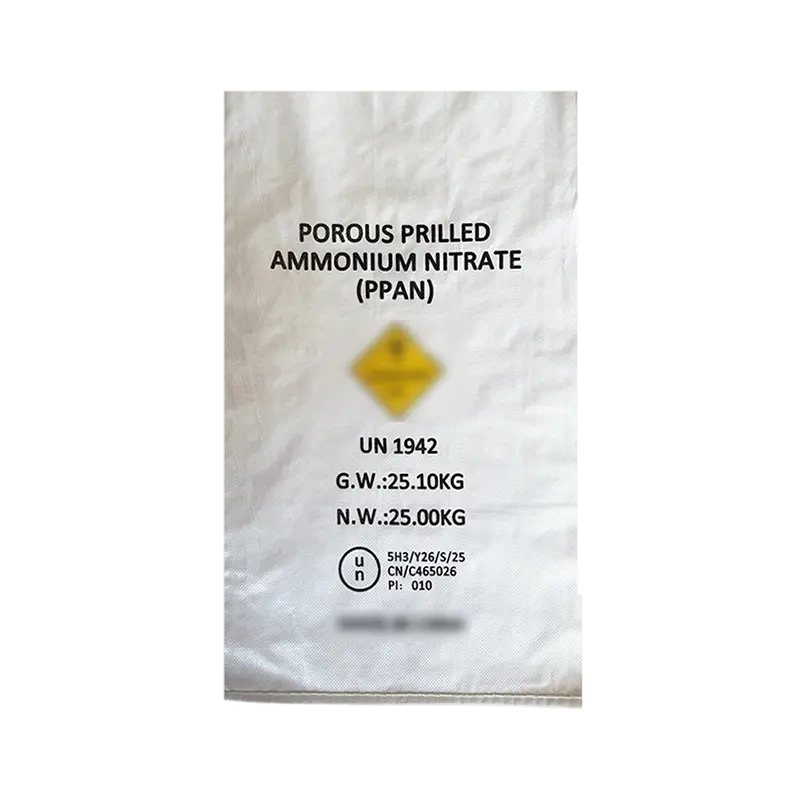
Fertilizer is not a forgiving product to package. Several properties make it harder to contain reliably than many bulk agricultural commodities.
Moisture Absorption
Many fertilizers are hygroscopic — they draw moisture from the surrounding air. Nitrogen-based compounds, urea, and certain compound fertilizers will absorb ambient humidity through any permeable surface they contact. Once moisture enters, the fertilizer clumps, cakes, and loses free-flowing properties. In severe cases it becomes unusable. Packaging that allows moisture transmission, even slowly, is not suitable for these products.
Chemical Interaction
Some fertilizers react with packaging materials under certain conditions. The bag material needs to be chemically stable against the specific compounds being packaged — not assumed to be inert simply because it handles other bulk goods without issues.
Heavy Loads and Stacking Stress
Fertilizer bags are typically heavy. A pallet of filled bags creates substantial cumulative weight on the lower layers. Seams that handle occasional mechanical stress in lighter applications can fail under the sustained compression load of fertilizer pallets stacked two or three high in a warehouse or container.
Long-Distance Export Conditions
Export fertilizer moves through variable conditions: different humidity levels as a vessel crosses climate zones, temperature fluctuations in the container, and handling at multiple transfer points. Packaging that performs adequately in a controlled domestic warehouse may not hold up through a multi-week ocean transit.
Why PP Woven Bags Are Used for Fertilizer
The woven polypropylene format became the standard for fertilizer packaging because it addresses the core mechanical requirements at a cost that works at bulk scale.
The interlocked weave structure distributes applied force across the fabric surface rather than concentrating it at any single point. A bag dropped, dragged, or subjected to stacking weight does not fail at a single weak spot the way a plain film bag would — the weave redirects and absorbs force across the entire panel.
Tear resistance is a direct result of this structure. Where a plain film tears in a straight line once punctured, a woven fabric localizes the damage. Individual threads may break, but the surrounding weave holds. For fertilizer bags handling coarse granular material with sharp edges, this matters in practical use.
Load-bearing capacity is a function of fabric weight and seam construction. Heavier fabric weight — measured in grams per square meter — handles heavier fill loads. Well-constructed seams distribute the mechanical load evenly rather than concentrating it at the stitch line. Both variables are specified at the manufacturing stage, not improvised after the fact.
Cost efficiency at bulk scale is the final part of the equation. A material that provides this level of mechanical performance at a cost that works for large-volume agricultural purchasing is genuinely difficult to find in alternative formats.
Types of PP Woven Bags for Fertilizer Packaging
Not every configuration of this packaging format suits every fertilizer application. The right choice depends on the specific protection requirements — and those vary more than they might initially appear.
Standard PP Woven Bag
The plain woven format without lamination is breathable, lower cost, and structurally sound for many bulk applications. For fertilizers that do not absorb moisture readily and are stored in dry, controlled conditions, the plain format may be adequate.
The limitation is the open weave. Ambient humidity passes through it over time. For hygroscopic fertilizers, or products moving through humid transit environments, the plain format does not provide adequate moisture protection on its own. A PE inner liner inserted into a plain woven outer bag addresses this while keeping the outer construction simpler.
PP Laminated Woven Bag
A PP laminated woven bag bonds a film layer to the outer surface of the woven fabric, creating a moisture barrier without changing the structural properties of the woven construction underneath. This is the practical upgrade for fertilizer packaging where moisture protection is a requirement.
The film layer also changes the surface character of the bag. Dust does not adhere as readily. The bag is easier to clean. And the surface can carry more detailed printed graphics than raw woven fabric — which matters for branded fertilizer products or export packaging that needs to meet retail presentation standards in the destination market.
For many nitrogen-based and compound fertilizer applications encountering variable humidity, a laminated configuration is the baseline specification.
Kraft Paper Laminated PP Woven Bag
A kraft paper laminated PP woven bag adds a paper outer layer to the construction — the paper surface faces outward, backed by the laminated woven polypropylene structure that handles the actual load. This format delivers multi-layer protection: the paper provides additional abrasion resistance and an extra buffer against moisture at the surface, while the woven core maintains structural integrity under fill weight and stacking stress.
The paper surface also has distinct visual qualities. For premium or export fertilizer products where brand presentation affects commercial outcomes, the tactile quality and print characteristics of a paper surface communicate differently from a plain plastic exterior. A paper laminated woven bag suits this application precisely because it combines visual credibility with industrial functionality.
Paper Laminated PP Bag
Closely related but distinct, a paper laminated woven bag prioritizes print surface quality and external appearance alongside protection. The paper layer is optimized for clean, detailed graphics — product names, application instructions, safety information — in ways that neither raw woven fabric nor standard film lamination fully achieves. For fertilizer producers who need product information to be clearly legible across a distribution chain, this surface performs well.
Standard vs Laminated vs Kraft Laminated: A Practical Comparison
Choosing between these formats is cleaner when the decision is framed around the actual requirements of the product and route, not around abstract quality rankings.
| Bag Type | Moisture Protection | Printing Surface | Cost Level | Best Suited For |
|---|---|---|---|---|
| Standard PP Woven | Low to moderate | Limited color range | Lower | Domestic dry storage and non-hygroscopic products |
| PP Laminated Woven | High | Supports multi-color, high-resolution printing | Mid-range | Export fertilizer and hygroscopic compounds |
| Kraft Paper Laminated PP | High to very high | Premium paper-quality printing surface | Higher | Premium export markets and branded fertilizer products |
| Paper Laminated PP | High | Smooth surface for clean, detailed graphics | Mid-range to higher | Retail packaging and specification-driven markets |
The table above is not a hierarchy — it is a matching exercise. A more expensive construction is not always the right answer. For compound fertilizer moving domestically in low-humidity conditions, a standard bag with a PE liner may outperform an expensive laminated construction that does not address the actual protection gap. For export urea moving through tropical shipping routes, lamination is not optional regardless of the cost differential.
How to Choose the Right PP Woven Bag for Your Fertilizer
The selection framework follows the product requirements, not a preference for any particular format.
If Moisture Protection Is the Core Requirement
A laminated PP woven bag is the appropriate choice. The film layer creates a continuous moisture barrier across the bag surface. For hygroscopic fertilizers — urea, ammonium nitrate, certain NPK compounds — this protection is not a feature, it is a functional necessity.
If the moisture sensitivity is particularly high, or the transit route is notably humid, combining a laminated outer bag with a PE inner liner adds a secondary barrier that provides redundant protection.
If Cost Efficiency Is the Binding Constraint
The standard woven format with appropriate fabric weight is the cost-efficient choice — but only when the product genuinely does not require moisture protection. Applying the cheapest available format to a moisture-sensitive product does not save money; it creates losses that accumulate across every shipment.
The cost question should always be asked alongside: what happens if this bag fails? If the answer involves significant product loss, contaminated cargo, or rejected shipments, the cost calculation changes.
If the Product Is Destined for Export
Export conditions introduce variables that domestic packaging often does not face: longer transit, multiple handling points, less controlled storage environments at the destination, and different regulatory or presentation requirements in the receiving market. A kraft paper laminated PP woven bag handles these demands reliably while also supporting the export presentation standards that branded agricultural products often require.
China PP woven bag manufacturing has established deep production capability in export-grade fertilizer packaging specifically because the export market demands consistent performance across long supply chains. Sourcing from a manufacturer with genuine export experience — not just export capacity — makes a practical difference in the documentation, compliance preparation, and production consistency that export shipments require.
If Bulk Supply Is the Purchasing Model
Wholesale PP woven bag purchasing for fertilizer applications involves more than price per unit. Consistency across a large production run — fabric weight, seam construction, lamination adhesion — is what determines whether the bags perform as specified across the full order. Variation that does not appear in samples shows up in bulk production and creates quality problems that are difficult to address once the bags are already in the filling line.
Fertilizer Packaging Applications by Product Type
Different fertilizer categories call for different packaging requirements, and aligning the bag specification with the product type prevents common sourcing errors.
Nitrogen Fertilizers
Urea and other nitrogen-based compounds are highly hygroscopic. Moisture turns them from free-flowing granules into a solidified mass that is difficult to handle and apply. Laminated bags — or laminated bags with PE liners for particularly sensitive products — are the standard configuration. The moisture barrier is the non-negotiable specification element.
Phosphate Fertilizers
Phosphate-based products are generally less hygroscopic than nitrogen compounds but still benefit from moisture protection in humid storage or transit conditions. The chemical properties are also relevant: the bag material should be verified as stable against the specific phosphate compound being packaged.
Compound Fertilizers (NPK)
Compound fertilizers vary widely in their formulation and moisture sensitivity. Some are granular and relatively stable; others are more hygroscopic depending on the nitrogen content. The packaging specification should be set according to the more demanding component of the formulation, not the average.
Bulk Agricultural Storage
For large-scale domestic storage in controlled warehouse conditions, standard woven bags with PE liners are often a practical configuration. The cost savings relative to full lamination can be substantial across large inventory volumes when the storage environment is genuinely moisture-controlled.
Customization Options for Fertilizer Bags
Custom PP woven bag specifications address the gap between what standard catalog bags offer and what specific fertilizer products and logistics operations actually require.
Customization options relevant to fertilizer packaging:
- Fabric weight (GSM): Matched to the fill weight and stacking requirements of the specific product. Heavier fabric for heavier loads; lighter fabric where fill weight is lower and cost efficiency matters.
- Bag dimensions: Sized to fill volume and pallet configuration, not to a generic standard. Bags that fit the pallet configuration reduce wasted space and improve stacking stability in transit.
- Lamination type: Film choice affects moisture resistance, surface printability, and heat tolerance. The lamination specification should follow the product requirements and transit conditions.
- Valve closures: For automated filling lines handling fine fertilizer powders, valve-style bags reduce dust and product loss during filling. The valve design also self-seals when the fill head is removed, keeping the bag exterior clean.
- PE inner liner: Added when moisture protection requirements exceed what the outer laminated surface alone provides, or when product contamination prevention requires a sealed inner environment.
- Custom printing: Product name, application instructions, safety information, certifications, and brand graphics — all can be specified to the print requirements of the destination market.
Frequently Asked Questions
Which PP Woven Bag Configuration Suits Compound Fertilizer Packaging?
Laminated PP woven bags are the standard choice for compound fertilizer. The moisture barrier protects hygroscopic components, and the laminated surface supports the printed product information that compound fertilizer packaging typically requires. For products with high nitrogen content or moving through humid conditions, a PE inner liner adds a secondary moisture barrier.
Are Laminated PP Woven Bags Waterproof?
Laminated bags provide strong moisture resistance — the film layer prevents humidity from penetrating the bag wall under normal storage and transit conditions. They are not submersion-proof, but they handle the ambient humidity conditions that fertilizer packaging faces in warehouses and during ocean or road transport.
Can PP Woven Bags Carry Chemical Fertilizers Without Reacting with the Material?
At ambient temperatures, polypropylene is chemically stable against many common fertilizer compounds. For any product with specific chemical properties, it is worth verifying compatibility with the bag manufacturer before committing to a specification — particularly for products that may generate heat or off-gases during storage.
What Is the Difference Between a Kraft Paper Laminated and a Standard Laminated PP Woven Bag?
A standard laminated bag bonds a polypropylene or polyethylene film to the outer surface of the woven fabric. A kraft paper laminated PP woven bag adds a paper outer layer instead of or alongside the film. The paper provides additional abrasion protection and a different print surface quality, and it changes the visual character of the bag in ways that suit certain market presentations. Both formats provide moisture protection; the paper laminated version adds surface protection and visual differentiation.
What Should Wholesale Buyers Check When Sourcing PP Woven Bags for Fertilizer at Scale?
Consistency across the full order is the priority concern. Verify that fabric weight, seam construction, and lamination adhesion specifications are maintained across production batches, not just on approved samples. Ask for batch testing documentation. For export orders, confirm that the supplier can provide phytosanitary or fumigation certificates as required by the destination country.
Does the Fill Method Affect the Bag Specification?
Yes. Automated filling lines running fine powder fertilizers work better with valve-style bags that allow pressurized filling and self-seal at completion. Manual or semi-automatic lines typically use open-mouth bags that are sewn shut after filling. The filling method should be part of the specification discussion with the manufacturer, not determined after the bag type is already selected.
Work with a Manufacturer That Understands Fertilizer Packaging
Fertilizer packaging decisions carry downstream consequences that a generic packaging supplier cannot always anticipate. The right manufacturer engages with the product type, the transit conditions, the fill method, and the destination market requirements — and translates those inputs into a specification that performs consistently across the full production run. Zhejiang Hongyang Packaging Co., Ltd. manufactures woven polypropylene bags for fertilizer and agricultural applications across a full range of configurations: standard woven formats with PE liners for domestic storage, PP laminated woven bags for moisture-sensitive export products, kraft paper laminated PP woven bags for premium or export-presentation applications, and valve-style constructions for automated filling lines. Custom PP woven bag specifications are supported across fabric weight, dimensions, lamination type, closure design, inner liner inclusion, and print surface. Wholesale PP woven bag orders are handled with consistent batch quality, in-house lamination, and complete export documentation support. Buyers who are working through a fertilizer packaging specification or comparing format options are welcome to reach out directly for samples and technical input.




-
 +86-17757792457
+86-15868461338 -
 +8617757792457
-
 [email protected]
[email protected] -
 Guidé Village, Chuiyang, Aojiang Town, Pingyang County, Wenzhou City, Zhejiang Province, China
Copyright ©Zhejiang Hongyang Packaging Co., Ltd.



