


 Guidé Village, Chuiyang, Aojiang Town, Pingyang County, Wenzhou City, Zhejiang Province, China

 English
 Español
 عربى
عربى 中文简体
中文简体
How PP Woven Bags Solve Heavy-Duty Packaging Needs
Date:May 15, 2026
Packaging failure in industrial and agricultural supply chains is not an abstract risk. A bag that tears during forklift handling, splits at the seam under load, or absorbs moisture in outdoor storage creates real downstream costs — product loss, damaged client relationships, and the operational disruption of dealing with a mess that should never have happened. Sourcing from a reliable PP Woven Bag Factory is often what separates packaging that performs across the full logistics cycle from packaging that holds together only under ideal conditions. Understanding why polypropylene woven construction handles heavy loads the way it does is the starting point for making an informed procurement decision.
What Makes Standard Packaging Fail Under Heavy-Duty Conditions
Paper and Standard Plastic Bags Have Structural Limits
Paper bags absorb moisture. Once the fiber structure is weakened by humidity or contact with wet surfaces, tensile strength drops sharply. A paper bag rated for a certain load under dry warehouse conditions may fail well below that threshold after a humid transit leg or outdoor storage exposure. The degradation is often invisible until the bag is under load — which is the worst possible moment to discover it.
Standard PE or non-woven plastic bags face a different problem. The material is uniform rather than structurally reinforced. Under point load — the corner of a pallet, the tine of a forklift, a sharp edge on another bag in the stack — it punctures or tears from a single stress point. The failure mode is sudden rather than gradual, and it tends to happen at the most inconvenient locations in the handling chain.
What Specific Conditions Break Packaging in Transit?
Understanding the failure conditions helps clarify why the material structure of a bag matters so much. The stresses that heavy-duty packaging faces during a full logistics cycle include:
- Static load from stacking — multiple bags bearing the weight of everything above them
- Dynamic shock during transport — vibration, impact from road surfaces, container movement
- Point loading from handling equipment — forklift tines, pallet edges, conveyor transitions
- Environmental exposure — moisture, UV radiation, temperature cycling in outdoor or semi-outdoor storage
- Abrasion from contact with other bags, rough surfaces, and loading equipment
A packaging material that addresses all of these under sustained use without significant weight penalty is genuinely difficult to find. PP woven construction addresses each one.
How the Woven Structure Creates Heavy-Duty Strength
The Weave Distributes Stress Across the Entire Bag Surface
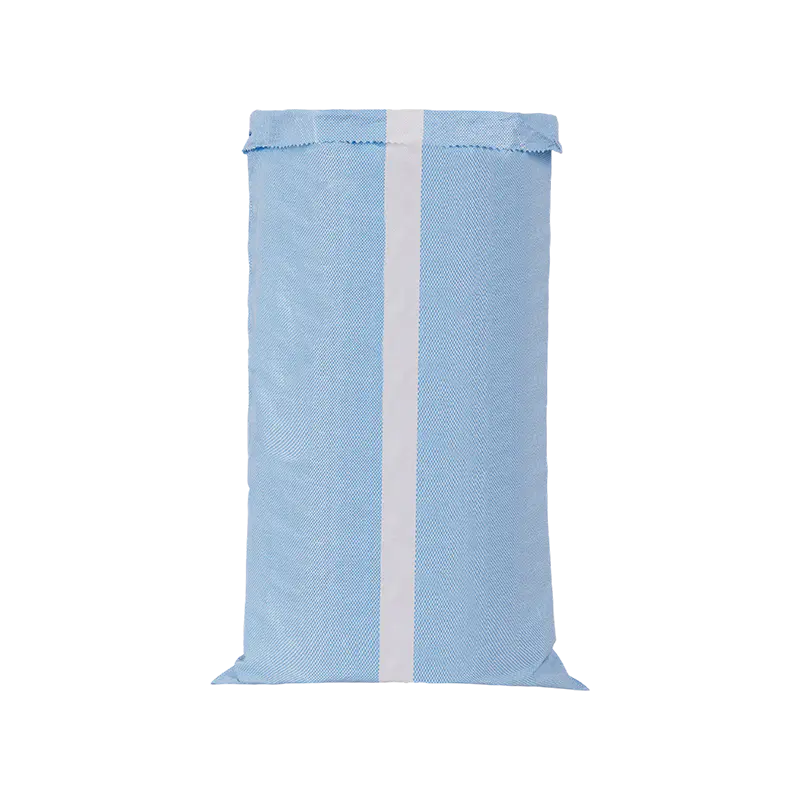
The structural logic of a PP Woven Bag is straightforward once you think about it. Individual polypropylene tapes — narrow strips of oriented PP film — are woven together in a crosshatch pattern, typically with tapes running both lengthwise and widthwise through the fabric. Under load, stress is not concentrated at a single point. It travels through the woven network and distributes across a large area of the fabric.
This is the reason PP Woven Bags resist tearing so effectively. A tear that initiates at one point has to propagate against the cross-grain of the weave in order to spread. The woven structure essentially locks the tear in place rather than allowing it to run. Puncture resistance follows the same logic — a sharp object that contacts the fabric has to displace multiple interlocked tapes rather than simply parting a uniform sheet.
Seam Construction Is As Important As the Fabric
A bag is only as strong as its weakest point, and that is usually the seam. The bottom seam of a heavy-duty bag carries the full weight of the contents under static load and absorbs shock loading during drops or rough handling. A poorly constructed seam — insufficient stitch density, wrong thread specification, inadequate overlap — fails at loads well below what the fabric itself could handle.
Quality seam construction in PP Woven Bags uses industrial stitching with high-tenacity thread, appropriate overlap at the fold, and stitch patterns designed for load-bearing rather than aesthetic finish. For valve bags used in powdered or granular products, the valve insert and its attachment to the bag body are additional seam points that require the same attention.
Moisture and Environmental Protection in PP Woven Bags
Non-Laminated vs. Laminated: What Is the Actual Difference?
A standard PP Woven Bag without lamination provides mechanical strength but allows air and some moisture vapor to pass through the weave. For products that tolerate some airflow — certain grains, some aggregates — this is acceptable and may even be beneficial for preventing condensation inside the bag.
For products that need moisture protection — cement, chemical powders, fertilizers that degrade with moisture contact — a laminated bag adds a polypropylene film layer bonded to the outer surface of the woven fabric. This layer closes the gaps in the weave and creates a moisture barrier without adding significant weight. The underlying woven structure still provides the mechanical strength; the laminate handles the environmental sealing.
Does UV Exposure Degrade PP Woven Bags Over Time?
It does, without UV stabilization. Polypropylene is susceptible to photo-oxidation under sustained UV exposure — the polymer chains break down, the material becomes brittle, and the tensile strength of the fabric drops. For bags stored outdoors or used in high-UV environments, this matters.
UV-stabilized PP Woven Bags incorporate additives into the tape production process that absorb or reflect UV energy and slow the degradation process. The stabilization extends the effective outdoor service life of the bag significantly. For buyers who need bags that hold up through long-term outdoor storage or repeated exposure in open logistics environments, UV stabilization is a specification worth confirming.
Industry Applications Where PP Woven Bags Perform Reliably
Agriculture and Food Grains
Grain and seed storage requires bags that handle load, resist moisture, allow some breathability, and can be stacked for extended periods. PP Woven Bags without lamination are widely used here because the woven structure allows limited air exchange that prevents condensation buildup, while the mechanical strength handles stacking loads and rough handling during harvest and storage operations.
BOPP (biaxially oriented polypropylene) printed bags add high-quality surface printing for branded agricultural packaging, combining the structural advantages of woven PP with visual quality appropriate for consumer-facing or retail grain products.
Construction Materials
Cement, sand, aggregates, and dry mortar present some of the most demanding packaging conditions in any industry. The product is heavy, often abrasive, and frequently handled with equipment that creates point loads. Cement dust, in particular, works into any gap in the bag structure and weakens seams over time if the construction is not tight.
Laminated PP Woven Bags with valve filling openings are standard for cement and construction powder applications. The laminate seals against dust penetration and moisture ingress; the woven structure provides the mechanical performance to survive the full distribution chain from factory to construction site.
Chemical and Industrial Products
Chemical granules, plastic pellets, and industrial powders require packaging that contains the product securely, resists contamination from external moisture, and performs through the handling conditions of industrial logistics. The combination of chemical inertness in PP, the structural strength of the woven construction, and the moisture barrier of a laminated surface makes PP Woven Bags a standard choice across this sector.
For hazardous or sensitive chemical products, inner liner configurations — a PE bag inside the outer PP woven structure — add an additional containment layer without requiring a separate secondary packaging step.
Comparing PP Woven Bag Configurations for Different Applications
A breakdown of how different bag constructions map to specific use cases:
| Bag Type | Moisture Protection | Breathability | Print Quality | Suited For |
|---|---|---|---|---|
| Standard woven PP (no lamination) | Low | High | Basic | Grains, sand, aggregates |
| Laminated PP woven | High | Low | Good | Cement, fertilizer, chemicals |
| BOPP laminated woven | High | Low | High resolution | Branded retail, food grains |
| PP woven valve bag | High | Low | Good | Powdered products, cement |
| PP woven with inner PE liner | High | Low | Good | Chemicals, sensitive materials |
| UV-stabilized PP woven | Moderate | Moderate | Basic to good | Outdoor storage, long-term use |
Choosing a configuration without understanding the application leads to over-specification in some areas and under-specification in others. A laminated bag in a context where breathability is needed creates condensation problems. A non-laminated bag in a moisture-sensitive application creates product quality issues. The configuration decision matters.
What to Evaluate When Sourcing PP Woven Bags
Fabric Specification Determines Load Performance
The fabric weight — expressed as grams per square meter — and the tape denier (the fineness of the PP strips) together determine how the bag performs under load. Heavier fabric weight and higher denier tapes produce stronger bags with higher load-bearing capacity. These are specifications that can be confirmed in a product data sheet and tested through standard load trials before committing to a large order.
When evaluating a supplier, ask for documentation of the fabric specification rather than relying on general claims about strength. The numbers are verifiable and they map directly to performance in the field.
How Does Printing Affect Bag Selection for Branded Packaging?
Surface printing on PP Woven Bags ranges from basic single-color flexographic printing on unlaminated fabric to full multicolor high-resolution printing on BOPP laminated surfaces. The right printing approach depends on what the bag needs to communicate and what the surface material supports.
For industrial and bulk packaging with identification printing only, standard woven fabric printing is cost-effective and durable. For consumer-facing products or retail packaging where brand presentation matters, BOPP laminated bags allow print quality that approaches paper-label standards on a structurally strong woven base.
Does Customization Affect Lead Time and Order Volume?
Custom specifications — specific dimensions, valve configurations, print designs, inner liners, UV stabilization — typically require a production run commitment from the manufacturer to justify tooling and setup costs. Understanding the relationship between customization level and order volume requirements early in the sourcing conversation prevents misaligned expectations.
Standard configurations available from stock or short production runs are practical for buyers testing a new supplier or covering urgent requirements. Custom configurations are appropriate for established procurement programs where volume, specification, and supply continuity are confirmed.
Sourcing PP Woven Bags for Industrial and Agricultural Applications
Packaging performance in heavy-duty applications is not a minor variable. It affects product integrity, logistics reliability, and the operational efficiency of every step from filling to final delivery. Buyers who have dealt with packaging failures know how quickly the cost of a bad specification multiplies across a supply chain. Getting the bag right — the right fabric weight, the right lamination, the right seam construction, the right configuration for the product and logistics environment — is worth the time spent on specification and supplier evaluation. For industrial buyers, agricultural suppliers, and construction or chemical companies working through the PP Woven Bag Business sourcing process, Zhejiang Hongyang Packaging Co., Ltd. offers a range of PP Woven Bag configurations including laminated, BOPP, valve, and UV-stabilized options, with OEM customization capability for dimensions, printing, and material specification. Reaching out to discuss your specific packaging requirements, product application, and order volumes is a practical starting point for finding the configuration that fits your supply chain.




-
 +86-17757792457
+86-15868461338 -
 +8617757792457
-
 [email protected]
[email protected] -
 Guidé Village, Chuiyang, Aojiang Town, Pingyang County, Wenzhou City, Zhejiang Province, China
Copyright ©Zhejiang Hongyang Packaging Co., Ltd.



