


 Guidé Village, Chuiyang, Aojiang Town, Pingyang County, Wenzhou City, Zhejiang Province, China

 English
 Español
 عربى
 中文简体

Woven Polypropylene Bags and Moisture Control: What the Material Can and Cannot Do
Date:Nov 27, 2026
Grain, animal feed, fertiliser, sand and many industrial powders must be kept reasonably dry from the filling point through storage and transport. Packaging that absorbs large amounts of water or that allows free liquid to enter can cause caking, spoilage or difficult handling. Polypropylene as a polymer absorbs little moisture compared with many natural fibres, yet a finished woven bag is not automatically a sealed barrier. The openness of the weave, the construction of the seams and the presence or absence of a coating or liner determine how much protection the package actually provides. White Woven Polypropylene Sacks and related formats therefore serve as practical containers for suitable dry materials when their limitations with respect to water and humidity are clearly understood.
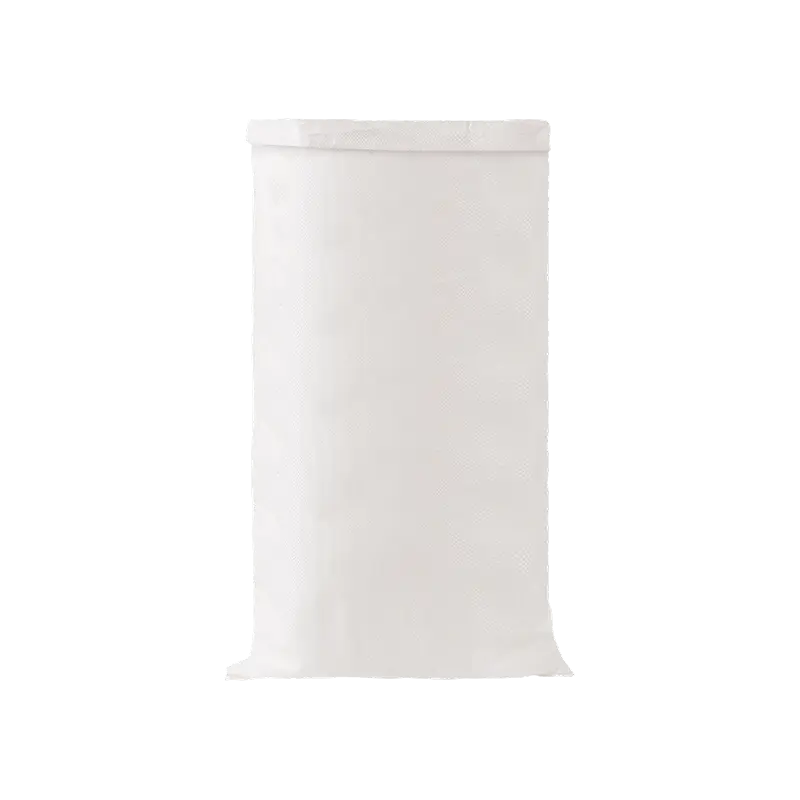
Tear-Resistant Woven Construction for Routine Handling
Polypropylene Fabric Structure and Everyday Use
Interlaced polypropylene tapes form a fabric that resists tearing under ordinary filling, lifting and stacking loads. The plain white surface is common for agricultural and industrial packaging because it accepts simple identification marks and presents a neutral appearance in warehouses and on trucks. The same construction is used for a range of dry, free-flowing products when the bag dimensions and fabric weight match the intended fill weight and handling method.
One Construction Serving Several Material Types
The same basic bag style can be considered for grain, feed, fertiliser, sand, cement and other dry solids, provided each material's particle size, moisture sensitivity and chemical character are checked against the bag specification. A bag that contains coarse dry sand without difficulty may still allow fine hygroscopic powder to pick up ambient humidity or to sift through the weave. Assessment therefore proceeds material by material rather than by assuming universal suitability.
What Polypropylene Woven Bags Can Contribute to Moisture Management
Inherent Moisture Behaviour of the Polymer
Polypropylene itself takes up very little water from the atmosphere. That property helps the fabric retain strength and dimensional stability in humid air better than many absorbent textiles. It does not, however, close the small openings that exist between the woven tapes or along stitched seams. Moisture vapour and liquid water can still pass through those paths unless additional barriers are present.
Containment of Dry Materials During Storage and Movement
A woven bag keeps dry product together as a discrete unit that can be stacked, counted and moved. Keeping filled bags under cover, off damp floors and away from direct rain remains necessary because the bag alone does not create a fully sealed microenvironment. The packaging supports organised handling; it does not replace good warehouse practice or dedicated barrier packaging when the product is highly moisture-sensitive.
Limits of Standard Woven Construction
Gaps in the fabric, needle holes along seams and the open mouth or valve before closure all provide routes for moisture. Ordinary woven polypropylene bags should not be treated as waterproof or as fully moisture-proof. When the contents must be protected against rain, condensation or prolonged high humidity, supplementary measures—covered storage, pallet wrapping, or an inner liner—are required.
Situations That Call for Extra Moisture Protection
Grain and Animal Feed in Humid Environments
Cereal grains and compound feeds can develop mould or lose quality when they absorb excess moisture. Even if the bag fabric itself does not hold water, humid air or liquid water entering through the weave or seams can raise the moisture content of the product. Dry, covered storage, separation from wet floors and protection from rain during loading and transport remain essential. The woven bag functions as a robust container within that protected chain, not as a substitute for it.
Fertiliser and Industrial Powders
Many fertilisers and fine industrial powders take up moisture readily, leading to caking, reduced flowability or unwanted chemical change. Before such materials are packed in woven bags, their sensitivity, the expected storage period and the transport climate are reviewed. Chemical compatibility with polypropylene and with any coating or liner is also confirmed so that the packaging does not itself contribute to product degradation.
Use of an Inner Liner or Secondary Barrier
When the application demands a higher level of moisture protection, a loose or attached liner of a suitable film can be placed inside the woven bag. The liner provides a continuous barrier while the outer woven fabric supplies the tensile strength for handling. Whether a liner is appropriate depends on the product, the required barrier performance and the filling method; the option is confirmed with the supplier for the specific bag configuration.
Practical Advantages of Tear-Resistant White Woven Bags
Resistance to Tearing in Normal Material Handling
The woven structure distributes stress and resists the propagation of small cuts under routine filling, carrying and stacking. This mechanical reliability supports the bag's role as a reusable or single-trip container for dry bulk solids. Load limits and service life still depend on fabric weight, seam design and actual handling severity; they are not implied by the tear-resistant description alone.
Flexibility Across Agricultural and Industrial Uses
Grain, feed, fertiliser, sand and cement are among the materials commonly packed in this style of bag when the specification matches the product. One product category can therefore serve several departments or customer types, provided each user confirms dimensions, fill weight and any need for liners or special closures.
General-Purpose Design for Varied Storage and Transport Tasks
The plain white exterior suits unmarked or simply marked stock in farms, factories, warehouses and smaller commercial operations. The bags organise dry materials into manageable units without claiming to exclude all water or to resist aggressive chemicals beyond the stated compatibility of the polymer.
Selecting Bags According to Moisture-Protection Requirements
Identification of the Material and Its Sensitivity
The first step is to name the contents—grain, feed, fertiliser, sand, cement or another substance—and to determine how sensitive that material is to humidity and liquid water. Materials that tolerate ordinary covered storage can often be packed in standard woven bags; materials that cake or spoil with modest moisture uptake need additional protection.
Confirmation of Bag Specification and Storage Conditions
Bag dimensions, expected fill weight, closure method and handling equipment are matched to the product. Humidity levels, risk of rain exposure, storage duration and transport mode are then considered. If the combined conditions exceed what an ordinary woven bag can reliably manage, a liner or an alternative packaging system is evaluated.
Discussion of Requirements Before Ordering
Clear description of the material, target fill weight, preferred bag size and the degree of moisture protection required allows the supplier to indicate whether the standard white woven bag is suitable or whether a coated fabric or liner configuration should be considered. Confirmation against the actual application reduces the chance of receiving packaging that under-performs in the field.
Overview of Moisture-Related Decisions for Woven Bags
| Factor | Implication for Packaging Choice | Action to Take |
|---|---|---|
| Low moisture absorption of PP | Fabric itself stays dimensionally stable in humid air | Rely on polymer property; still control liquid entry |
| Open weave and seams | Paths for vapour and liquid remain | Do not treat ordinary woven bags as waterproof |
| Grain and feed in humid climates | Risk of mould or quality loss | Use covered storage; consider liner if needed |
| Hygroscopic powders and fertiliser | Caking and handling problems | Confirm compatibility; add barrier if required |
| Need for higher barrier | Standard woven bag insufficient alone | Evaluate inner liner or alternative packaging |
| Handling strength | Tear resistance supports routine filling and stacking | Match fabric and seams to fill weight and handling |
Matching Expectations to the Real Performance of Woven Bags
Polypropylene woven bags organise and protect dry materials during ordinary handling and storage, and the polymer's low moisture absorption helps the fabric remain stable in humid air. They do not, by themselves, create a fully sealed moisture barrier. Chemical Packaging Bags of woven polypropylene construction are therefore specified with a clear view of the product's sensitivity and of the storage and transport environment. When higher protection is required, liners or complementary measures are added. Zhejiang Hongyang Packaging Co., Ltd. produces white tear-resistant woven polypropylene bags for grain, feed and suitable industrial materials. Review of bag dimensions, fabric construction, closure options and the possible use of liners against the material's moisture sensitivity and the intended logistics conditions supports selection of packaging that matches both handling needs and realistic moisture-control expectations.




-
 +86-17757792457
+86-15868461338 -
 +8617757792457
-
 [email protected]
 -
 Guidé Village, Chuiyang, Aojiang Town, Pingyang County, Wenzhou City, Zhejiang Province, China
Copyright ©Zhejiang Hongyang Packaging Co., Ltd.



